
The blue-ringed octopus is one of the most striking animals you can encounter underwater. Its calm movements and tiny size often catch divers by surprise, yet this little cephalopod leaves a lasting impression on anyone who has seen it in the wild.
Curious about what makes the blue-ringed octopus so special and how to approach it safely? Read on to get to know this tiny cephalopod better.
Meet the Blue-Ringed Octopus
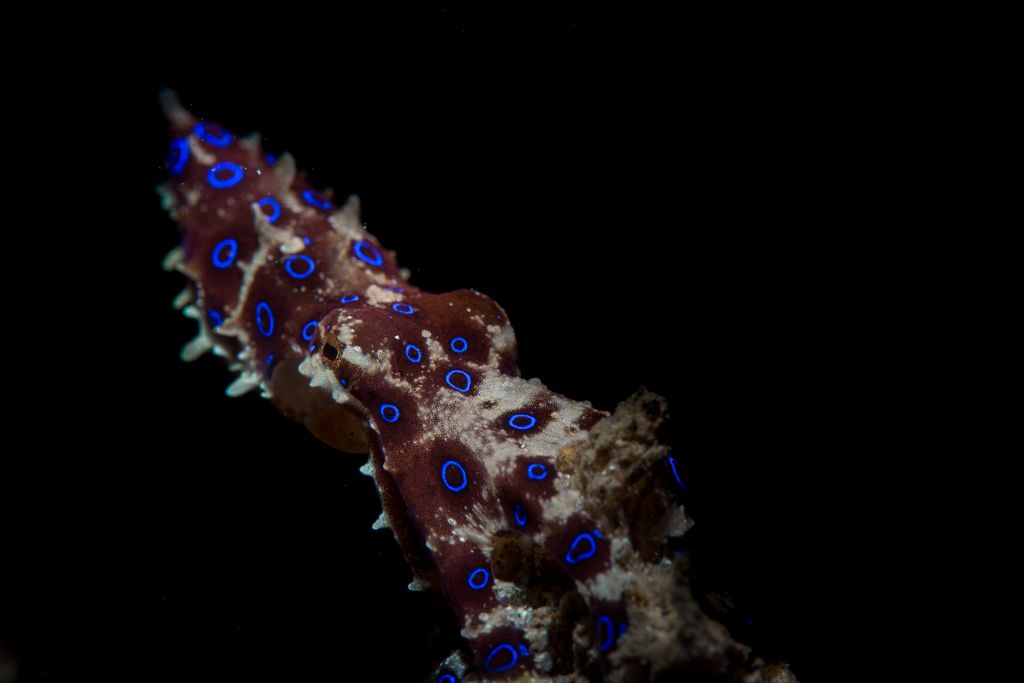
Before you meet one in the wild, it helps to understand what sets this tiny animal apart. The blue-ringed octopus is easy to overlook at first glance, yet every detail of its biology and behavior shows how well adapted it is to life on the reef.
The more you know about it, the easier it becomes to appreciate a sighting without disturbing its space.
Scientific Name
The blue-ringed octopus belongs to the genus Hapalochlaena, a group of highly venomous octopuses found across the Indo-Pacific.
While there are four confirmed species, divers in Asia are most likely to encounter the Greater Blue-Ringed Octopus (Hapalochlaena lunulata) or the Southern Blue-Ringed Octopus (Hapalochlaena maculosa).
Size and Appearance
They are deceptively small. The mantle (head) is often no bigger than a golf ball, with arms spanning just 12 to 20 centimeters. Their skin is naturally beige or yellowish, allowing them to vanish into sand and rubble.
Surprisingly, the octopus’s famous electric blue rings are not always visible. They are actually a warning display that flashes only when the animal feels stressed or threatened.
A Potent Defense
Despite their small size, the blue-ringed octopus is one of the most venomous animals in the ocean. They carry tetrodotoxin (TTX), a powerful neurotoxin produced by bacteria in their salivary glands.
This venom is 1,000 times more toxic than cyanide and can cause respiratory failure in humans. There is no known antidote, which is why divers must always maintain neutral buoyancy and keep a respectful distance.
Behavior and Hunting Habits
Contrary to popular belief, blue-ringed octopuses are not strictly nocturnal. In muck diving destinations like Lembeh, they are frequently seen hunting during the day.
They are relatively calm animals, spending much of their time poking their arms into crevices. They hunt small crabs and shrimp, using their venom to paralyze prey before eating.
Remarkable Camouflage
Their ability to blend into their surroundings is the main reason divers swim past them without noticing.
Through subtle changes in skin texture and colour, they can mimic the texture of algae-covered rocks or coarse sand. Spotting one usually requires slowing down and looking for the slight movement of an arm rather than the animal itself.
Where to Find the Blue-Ringed Octopus
This tiny cephalopod can be found all across the Indo-Pacific, but actually spotting one takes patience, a slow approach, and the right kind of dive site.
You’ll often find it in shallow reefs, rubble slopes, and classic muck habitats where shells, rocks, or even discarded bottles make the perfect hiding places. If you’re hoping to see one in the wild, these destinations are among the most reliable.
1. Lembeh Strait, Indonesia
Lembeh Strait is one of the world’s top muck diving destinations and a hotspot for blue-ringed octopus sightings. Divers often spot them hunting along sandy slopes or tucked into discarded shells and debris.
The strait is also home to other rare cephalopods, like wunderpus and mimic octopus.
2. Anilao, the Philippines
Anilao stands shoulder to shoulder with Lembeh for macro biodiversity and is a reliable spot for photographers hoping to see a blue-ringed octopus.
Its mix of sand, rubble, and coral creates a clean, varied backdrop that feels a little different from classic muck sites, making it an enjoyable place to explore with a camera.
3. Bali, Indonesia
Bali’s muck diving sites, including Seraya and the slopes around Tulamben, are known for their rich macro life. Blue-ringed octopuses are occasionally spotted hunting across the volcanic sand or tucked into small crevices.
With a bit of patience, even casual macro divers have a fair chance of seeing one.
4. Ambon, Indonesia
If you love sea critters, then Ambon Bay should be on top of your list. Its blend of sandy bottoms, broken coral, and the occasional man-made debris creates plenty of places for blue rings to hide.
While encounters can vary from day to day, this area is well known for offering sightings of rare and unusual species.
5. Milne Bay, Papua New Guinea
Milne Bay blends colourful reefs with calm, macro-friendly sites, making it an enjoyable place to search for blue rings. It’s a little more remote, but divers have unexpected finds in the region.
With such rich biodiversity, it’s no surprise that Milne Bay remains a favourite among those who love discovering unusual marine life.
Photographing the Blue-Ringed Octopus
Photographing a blue-ringed octopus is a rewarding experience for divers and underwater photographers.
Because they are small and blend perfectly into the rubble, spotting one is half the battle, but getting a clear, sharp shot requires preparation and patience.
How to Capture the Perfect Shot
If you want a perfect shot, it helps to have your camera ready long before you spot one. This gives you a better chance of capturing the moment without needing to rush or get too close.
Here are some quick tips on creating the right camera setup:
- Camera settings: For macro shooting, a small aperture (f/16 to f/22) is essential to get the entire animal in sharp focus. Keep your shutter speed around 1/250s to freeze motion and use a low ISO (100–200) to minimize noise.
- Lighting: Use strobes to bring out the vibrant colours, but position them carefully to avoid backscatter in sandy environments. A focus light is incredibly helpful for locking onto the subject in dim water.
- Observation: Move slowly and look for movement in the rubble or near clam shells. They often hunt by “parachuting” over coral heads to trap prey, which offers a dramatic photo opportunity.
- Safety: Always remember these animals carry enough tetrodotoxin to kill humans. Maintain neutral buoyancy and keep your camera rig steady; never get so close that you risk accidental contact.
Ethical Photography
It is easy to get caught up in the excitement of finding a blue-ringed octopus, but we must remember that we are guests in their home. The goal of underwater photography should always be to observe natural behaviour without influencing it.
- Do not harass: Never poke or prod an octopus to make it “flash” its blue rings. This warning display indicates high stress and fear, not a natural state for the animal.
- Watch your fins: These creatures live on the bottom, often in silt or sand. Reckless fin kicks can destroy their habitat or bury them. Use frog kicks and stay off the bottom.
- Limit Your Flashes: Taking dozens of rapid-fire strobe shots can blind and disorient the octopus, leaving it vulnerable to predators. Take a few well-composed shots and then move on.
Ready to See the Blue-Ringed Octopus in Real Life?
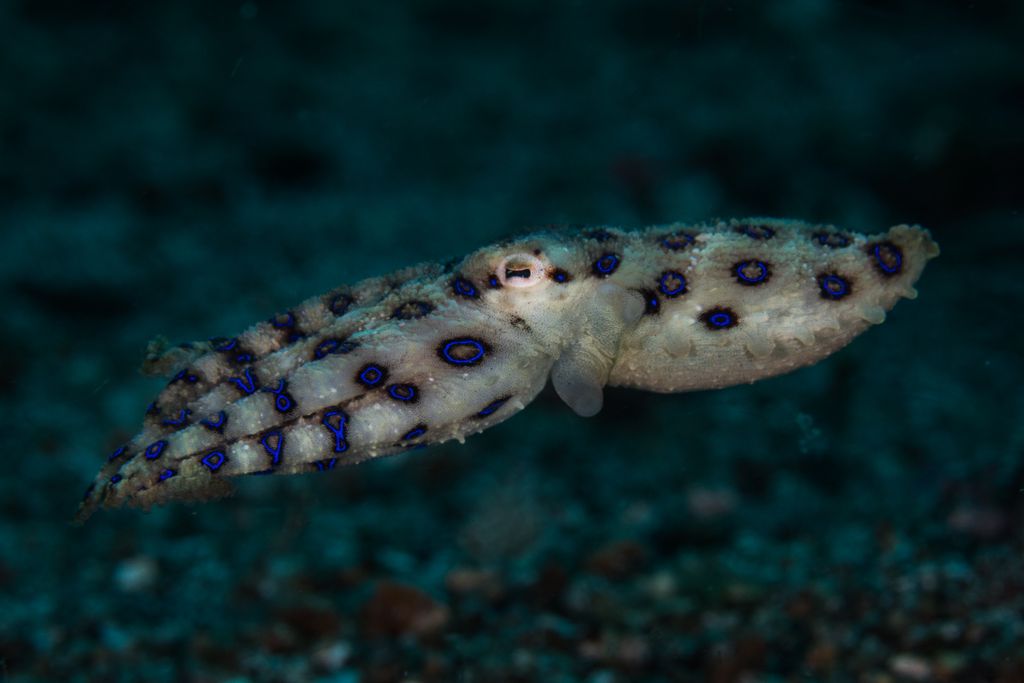
Reading about the blue-ringed octopus is fascinating, but nothing beats the thrill of spotting those electric rings with your own eyes. If this bucket-list critter is calling your name, Lembeh Strait is the place to be.
Make Solitude Lembeh Resort your home base for the adventure. Our expert guides live for the hunt and know exactly where to find these tiny marvels, ensuring you get the encounter of a lifetime.
When you aren’t underwater, you can recharge in our stunning villas, enjoy hearty meals prepared by our expert chef, or swap stories by the pool.
What are you waiting for? Book your next diving adventure with us here today!