
When science feels optional
Citizen science rarely fails because people do not care. It fails because it is often positioned as an optional extra, disconnected from the experience it hopes to enrich.
A poster on a wall, a form mentioned once in a briefing, a well-meaning invitation that floats somewhere outside the rhythm of the day. Guests nod, teams move on and participation fades quietly into the background. Not through resistance, but through irrelevance.
This is the core problem. Motivation does not come from instruction or suggestion. It comes from relevance, trust and continuity. And those things only exist when citizen science is embedded into operations, not layered on top of them. This principle underpins how Solitude approaches hospitality, diving and conservation across its liveaboards and resorts, where participation is designed into the experience rather than added as an afterthought.
When science sits outside daily flow, it feels abstract. When it lives inside it, contribution becomes instinctive.
Attention with purpose
At its simplest, citizen science is attention with purpose. Noticing behaviour. Recognising timing. Observing what is present, absent or changing. These acts require no specialist training, but they do require the right conditions. People must feel that what they are witnessing matters, that their contribution is welcomed and that it connects to something beyond a single moment.
Embedding citizen science into operations creates those conditions.
Why relevance matters
Relevance is the first driver. Guests are far more likely to contribute when they understand why a moment matters now, not in theory. Timing, behaviour and context are powerful motivators when they are explained clearly and calmly. When people realise that what they are seeing may be fleeting, seasonal or difficult to replicate, attention sharpens. Observation becomes intentional.
This is why initiatives like the REAL FOCUS Shootout work as a motivational model, not just a photography programme. Participants are not urged to chase images or perform for outcomes. They are trusted to observe honestly. The requirement to submit unedited files is not about restriction. It is about preserving context. Behaviour matters more than perfection. Missed shots still carry value.
That trust changes how people behave underwater. Movement slows. Distance increases. Divers wait instead of pursuing. In doing so, they witness more natural behaviour and create documentation that holds meaning beyond personal memory.
Trust over performance pressure
Trust is the second driver, and it is fragile. The moment guests feel assessed or corrected, motivation collapses. This is why unknown sightings must be treated as valid contributions rather than mistakes. Uncertainty is part of observation. Removing performance pressure allows honesty to surface.
Guests sometimes hesitate to contribute because they feel what they have captured or noticed is not good enough. A partial view, an unfamiliar behaviour or an image that lacks clarity can feel unworthy of sharing. Yet science often advances through exactly these fragments. An unexpected detail, a timing anomaly or a repeated observation can prompt questions that lead to new insight. Contribution does not require certainty. It requires willingness. You never know what line of inquiry your moment might begin.
When it becomes real
In Palau, where Solitude operates with a strong emphasis on respectful diving practices and long-term reef care, this trust becomes especially visible during spawning events. These moments are visually compelling, but they are also sensitive. Without structure, they risk becoming crowded and chaotic. With clear operational embedding, they become moments of shared responsibility.
Guests are encouraged to document what they witness through images and video, but with firm emphasis on spacing, positioning and restraint. The message is simple and powerful: holding back allows behaviour to continue. Observation lasts longer than intrusion. The experience becomes richer precisely because distance is maintained.
These images and observations are then shared with relevant researchers, behavioural experts and conservation specialists, contributing to a broader understanding of timing, patterns and environmental context. In many cases, this material supports ongoing studies, long-term monitoring and informed decision-making, extending the value of each encounter well beyond the moment it was experienced.
What motivates guests here is not being asked to help, but being trusted with something rare.
Built into the day
Continuity is the third driver, and it is where operations matter most. One-off moments do not build habits. Repetition does. When citizen science is embedded into daily routines, it becomes familiar rather than novel. Familiarity removes friction. Friction is where motivation leaks away.
Operational continuity shows up in small, deliberate ways. Tools placed where guests naturally pause feel like part of the environment rather than an interruption. Language repeated consistently across briefings and days builds confidence. When guests know what to expect, participation becomes easy.
The role of the team is central to this continuity. Guides and crew do not motivate through instruction. They motivate through example. Calm hovering, thoughtful distance and patient observation communicate values more effectively than any rule ever could. Guests mirror the behaviour they can see. Diving etiquette becomes culture rather than compliance.
From intention to impact
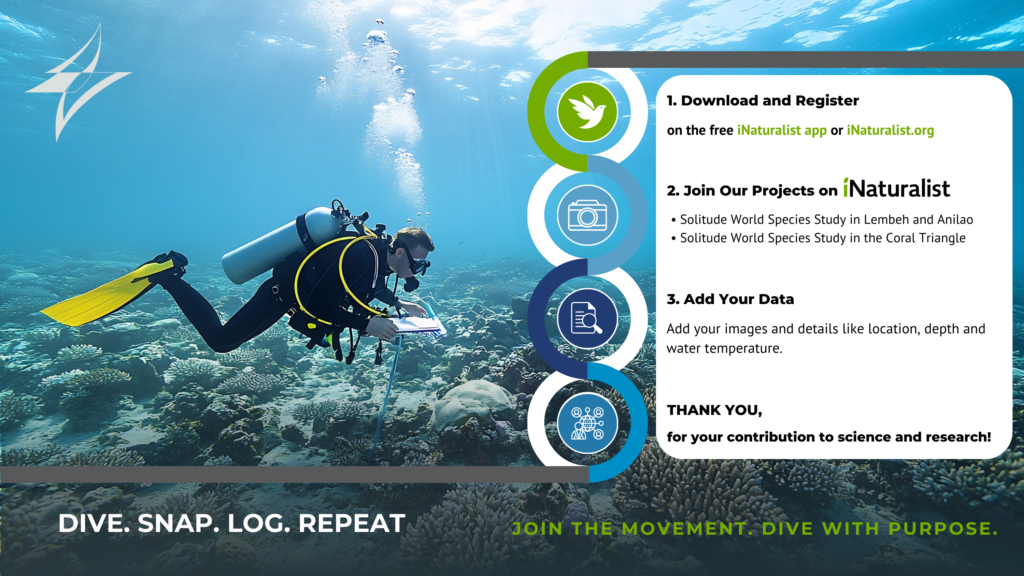
Post-dive moments are where continuity either strengthens or dissolves. Logging observations works best when it aligns with existing rhythms: rinsing gear, hydrating, reviewing images. When documentation fits naturally into this flow, it feels reflective rather than administrative.
Support should remain visible but optional. Short daily opportunities for discussion or identification help those who want guidance without creating pressure for those who prefer quiet observation. Choice is part of trust.
Over time, something subtle but important happens. Guests begin to notice patterns. They recognise behavioural shifts. They understand how their own actions influence what they witness. Sustainable travel stops being an idea and becomes a lived experience shaped by daily decisions.
This is why citizen science must be embedded into operations if it is to motivate participation. Not because systems are efficient, but because motivation is human. People contribute when they feel relevance in the moment, trust in the process and continuity across time.
People do not contribute because they are asked. They contribute because they are trusted with something that matters.
When hospitality leads this process, science becomes part of the journey rather than an obligation attached to it. The most effective programmes are rarely loud or promotional. They are woven into the day, reinforced through example and sustained through thoughtful design.
That is how citizen science moves from intention to impact.