
From cleaner wrasse and coral gardeners to expert mimics and midnight drifters, the most memorable underwater encounters begin when we look beyond the species list.
Ask divers what they hope to see on their next trip and the answers often arrive as a checklist: sharks, mantas, turtles, frogfish, octopuses and, perhaps, one particularly elusive nudibranch.
But marine life becomes far more interesting when we stop thinking only about what we have seen and start noticing what each animal is doing.
A coral reef is not simply a collection of colourful species. It is a busy, interconnected community. Some animals maintain it. Others reshape it, clean its residents, patrol its boundaries or disappear into it completely. There are commuters, architects, opportunists, illusionists and hunters, each responding to the reef in a different way.
Across the destinations explored by Solitude Liveaboards and Resorts, from the black volcanic sand of Lembeh and the reefs of Anilao to Palau, Tubbataha, Komodo, Raja Ampat and the Banda Sea, divers can meet an extraordinary cast of marine characters. The real reward is not simply finding them. It is being present long enough to see their lives unfold.
The Reef Gardeners
Parrotfish are among the reef’s most recognisable residents, but their importance extends well beyond their colour.
By scraping algae and material from reef surfaces, parrotfish help prevent algae from overwhelming areas where corals may grow. Some species also contribute to the creation and movement of carbonate sediment, gradually reshaping the reef beneath them.
Few make a stronger impression than the bumphead parrotfish. Large, powerful and often seen travelling in groups, they can appear almost prehistoric. In Palau, their story becomes even more remarkable when hundreds gather around particular lunar phases to spawn.
Selected itineraries aboard Solitude Gaia Palau are timed to explore these natural events. The encounter is not simply about seeing a large aggregation of fish. It is an opportunity to witness the moment an entire population responds to the moon, currents and season.
The reef is never static, and the bumphead parrotfish is one of the animals actively remodelling it.

The Cleaning Crew and Their Clients
One of the most revealing places on a reef can be remarkably small.
Cleaning stations are locations where cleaner wrasse, cleaner shrimp and other specialists remove parasites and unwanted material from visiting fish. Their clients may include reef fish, turtles, rays and sharks. Some wait, hover or adjust their posture, apparently signalling that they are ready to be attended to.
At German Channel in Palau, manta rays may circle or hold position above cleaning stations while small fish work across their bodies. The difference in scale is striking: a tiny reef fish performing a service for an animal with a wingspan of several metres.
Divers may also notice reef sharks making slow passes through cleaning areas or turtles pausing while fish inspect their shells and skin. These encounters reveal cooperation in a world often portrayed only through competition and predation.
For the patient observer, the cleaner can be every bit as interesting as the client.

The Illusionists
In Lembeh Strait and Anilao, survival is frequently an exercise in disappearing.
The mimic octopus does not rely on one fixed disguise. It alters its colour, posture and movement, creating the impression of other marine animals as circumstances change. The wonderpus, coconut octopus and blue-ringed octopus each employ their own combinations of camouflage, body language and behaviour.
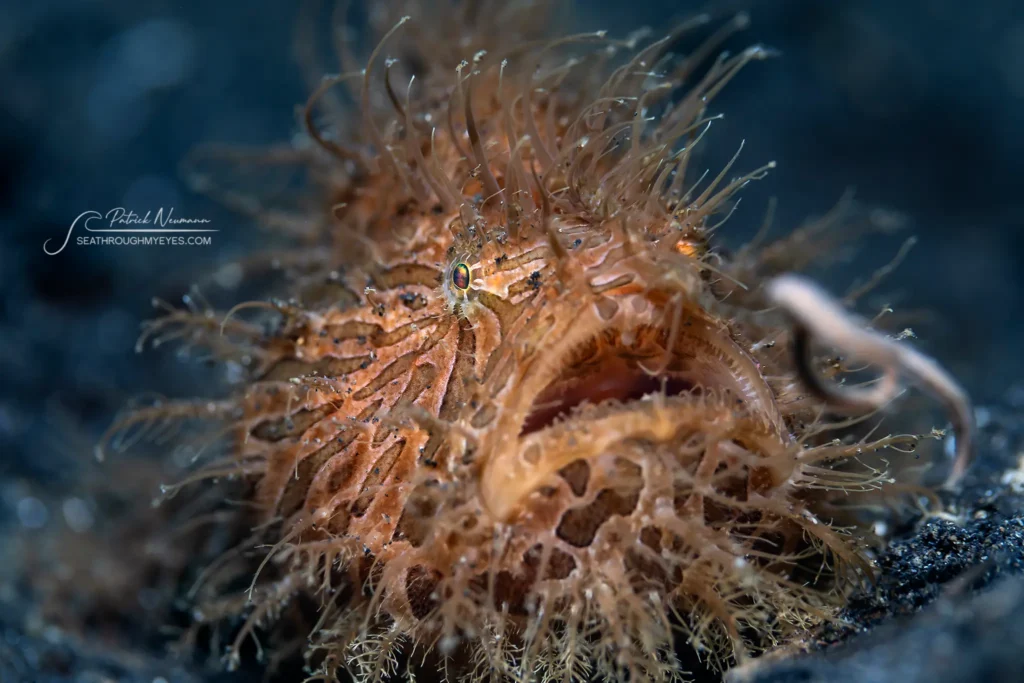
Frogfish take a different approach. Many resemble sponges, rocks or algae so convincingly that divers can stare directly at one without recognising it. Rather than chasing prey, a frogfish waits and uses a modified dorsal spine as a lure, drawing potential food within striking distance.
Pygmy seahorses make themselves nearly indistinguishable from the gorgonians on which they live. Ghost pipefish align themselves with crinoids, seagrass or drifting debris. Even a flamboyant cuttlefish, despite its vivid reputation, can be surprisingly difficult to recognise until it begins to move.
At Solitude Lembeh Resort, the dark sand and scattered rubble provide a stage for hairy frogfish, rhinopias, flamboyant cuttlefish, pygmy seahorses and several remarkable octopus species. At Solitude Acacia Resort in Anilao, volcanic slopes, coral reefs and muck sites support their own rich mixture of nudibranchs, cephalopods, crustaceans and cryptic fish.
These dives reward a different rhythm. Slow down, look carefully and allow the animal to reveal itself.
The Ambush Artists
Not every hunter needs speed.
A frogfish may remain almost completely motionless until prey enters its narrow strike range. A stargazer can bury most of its body beneath the sand, leaving little more than its eyes and mouth exposed. Scorpionfish allow camouflage to bring prey close, while ribbon eels and morays watch from holes and crevices.
These animals transform apparently empty sand, rubble and reef into potential hiding places.
Their success also explains why an experienced dive guide can change an entire dive. Recognising the outline of a buried animal or the tiny movement of a lure requires familiarity with the habitat as much as knowledge of the species.
Once divers learn to notice these signs, the seabed never looks empty again.
The Midnight Drifters
When daylight fades, the cast changes.
Reef fish retreat into crevices, nocturnal hunters emerge and crustaceans begin moving openly across the substrate. Bobtail squid rise from the sand. Hunting octopuses search the reef. Decorator crabs move beneath portable disguises made from material collected around them.
Away from the reef, an even greater transformation is taking place.
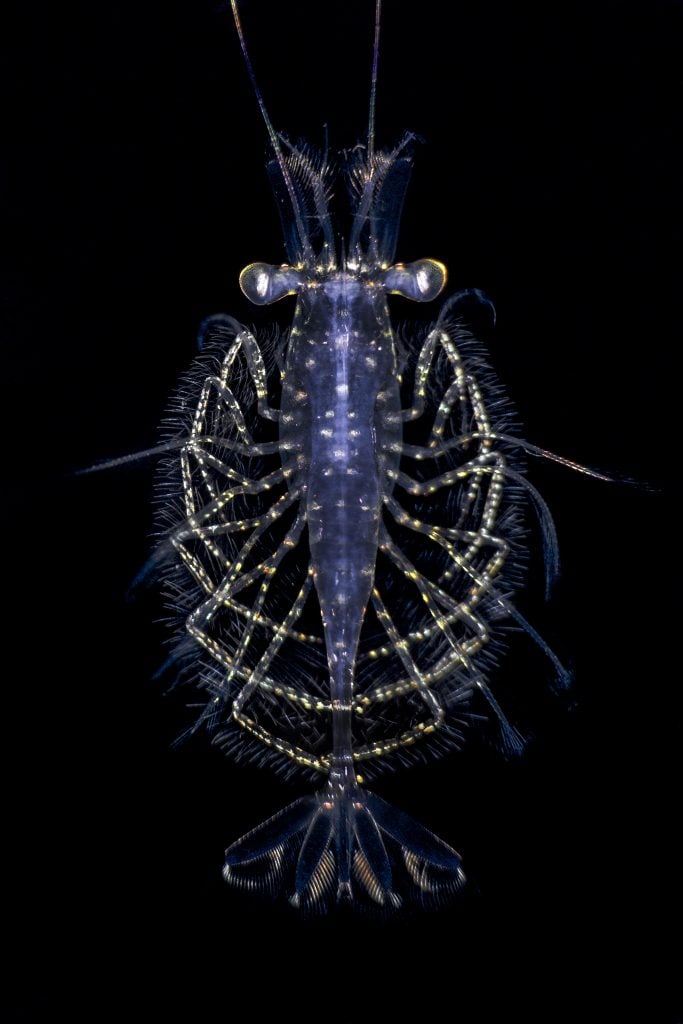
During a blackwater dive, divers suspend over deep water at night as planktonic animals migrate toward the surface. Larval fish, tiny cephalopods, jelly-like organisms and translucent crustaceans appear in the lights, often looking entirely different from their adult forms.
Blackwater diving in Anilao offers a glimpse into this nightly movement. Some subjects will eventually settle on reefs. Others will remain in open water. Many are so delicate and unfamiliar that identifying them can be part of the fascination.
It is one of diving’s clearest reminders that the ocean contains entire communities most people never see.
The Long-Distance Travellers
Liveaboard routes add another dimension to marine-life encounters by connecting habitats separated by deep channels, open ocean and remote islands.
Aboard Solitude Adventurer, divers may encounter manta rays in Komodo, wobbegong sharks among the reefs of Raja Ampat or seasonal schooling hammerheads in the Banda Sea. Sea snakes patrol the volcanic slopes around Manuk, while clouds of reef fish gather over the coral gardens of Misool.
In the Philippines, Solitude One explores waters where reef sharks, turtles, barracuda and jacks move along Tubbataha’s walls, with occasional whale shark encounters adding an unpredictable visitor to the scene.
These larger animals may travel considerable distances in search of food, suitable conditions, cleaning stations or reproductive opportunities. Their appearance is never guaranteed, and that uncertainty is part of what makes a natural encounter meaningful.
The ocean decides who arrives.
The Crowd Scene
Some encounters are defined not by one animal, but by thousands.
A tightly gathered school of jacks can turn the water silver. Barracuda form spiralling walls. Fusiliers stream across a reef as predators patrol nearby. In Moalboal, sardines create constantly changing shapes as the school responds to movement and threat.
A school is both many individuals and one coordinated presence. It expands, contracts and changes direction with extraordinary speed, often without any obvious leader.
For divers, it is one of the few moments when marine life does not simply occupy the scene. It becomes the scene.

Looking Beyond the Checklist
Resort and liveaboard diving offer different ways to understand these marine communities.
A resort stay allows divers to revisit familiar sites, observe changes and spend time searching for smaller subjects. A liveaboard moves through connected but contrasting habitats, revealing how the cast changes from volcanic sand and sheltered reefs to current-swept channels, coral walls and open ocean.
Together, the destinations explored by Solitude Liveaboards and Resorts offer encounters at almost every scale, from a nearly invisible pygmy seahorse to a passing manta ray.
None of these animals is simply waiting to be seen. They are feeding, hiding, cleaning, travelling, courting, defending territory and responding to a world of signals we are only beginning to understand.
The best marine-life encounter may still be the animal you hoped to find. But the story you remember will often be what it did after you found it.
Marine-life encounters are entirely natural and cannot be guaranteed. Responsible observation, good buoyancy and respectful distance help ensure that behaviour unfolds without interference.