

Curious how to take beautiful underwater photos without harming the reef or its wildlife? Ethical underwater photography starts long before you lift your camera. It’s about slow, mindful diving, understanding marine behaviour, and keeping the ocean’s wellbeing at the centre of every shot.
This guide walks you through practical techniques that protect fragile habitats while helping you create more meaningful images. Dive into the next sections to learn how to photograph responsibly and with purpose.
Why Ethical Photography Matters More Than Ever
The ocean reacts quickly to what we do underwater. A fin that brushes a coral, a hand settling on the seabed, or a flash used too close can disturb creatures that already live with changing conditions.
Photographers have more influence than they think. Their images affect how people see the ocean and often shape interest in diving and conservation. When photos are taken with care, they help others understand why marine life needs space and protection.
Most harm comes from small habits, not bad intentions.
Getting too close, blocking an animal’s path, or trying to make it move can change its behaviour. Even gentle pressure can cause stress or interrupt natural routines. Recognising these risks helps you take photos in a way that keeps the ocean comfortable.
Ethical Underwater Photography Basics
So, how can you take pictures of the ocean ethically? It all starts with a simple mindset. You look after the people you dive with and the ocean you step into. Listening to local guides, following briefings, and trusting their knowledge make every dive smoother and kinder to marine life.
Patience and awareness are key. When you slow down, notice an animal’s mood, and hold steady in the water, the reef feels calmer around you. This awareness protects the habitat and often gives you more honest, relaxed moments to photograph.
Many photographers think of this as being family-minded and ocean-minded. You care for the reef the same way you would care for someone close to you, which leads to calmer encounters and photos that feel genuine.
Technique #1 – Master Buoyancy Before You Touch the Camera
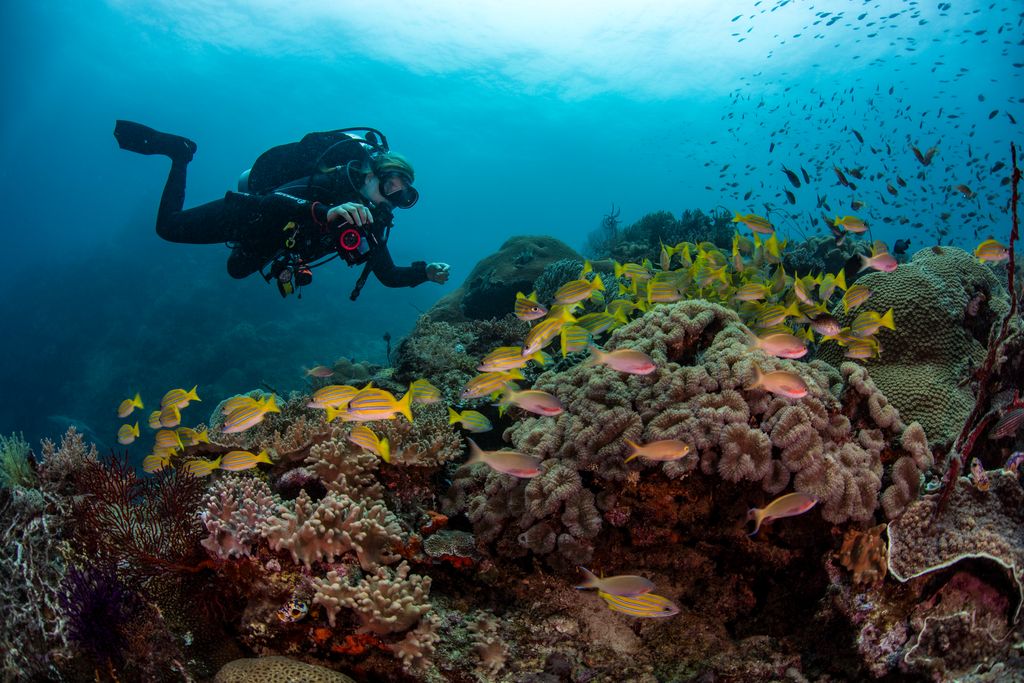
One of the simplest ways to be more ethical underwater is to build solid buoyancy control. It keeps you clear of the reef, stops sand from billowing up, and helps protect the small, fragile habitats that can’t bounce back from a single misplaced fin.
This is even more important when you’re diving in macro sites, where so many creatures live on soft sediment, tiny sponges, and delicate structures that disappear with the slightest touch. When you stay steady in the water, everything around you stays calm too.
Practical tips for improving buoyancy:
Practice hovering in place, kicking with minimal movement, and adjusting your breathing to stay level. Spend time fine-tuning your trim before adding a camera.
Technique #2 – Approach with Patience, Not Pressure
Marine life reacts surprisingly well to calm, steady behaviour. When you slow down and give an animal a bit of space, it often settles in and carries on with what it was doing. You end up with a more natural encounter and far better photos without pushing the animal out of its comfort zone.
- Slow movement and calm breathing: Keep your fin kicks small. Let your breath guide micro-adjustments so your body stays quiet in the water.
- Predictable positioning: Approach from an angle the animal can see. Sudden appearances from behind or above can startle even confident species.
- Never corner or chase wildlife: If a creature swims away, let it go. Chasing creates stress and harms the environment.
- When the animal tells you “enough”: Look for signs like retreating, closing fins or mantles, rapid colour change, or sudden hiding. Respect the message and give it space.
Technique #3 – Know Your Subject (Behaviour Awareness)
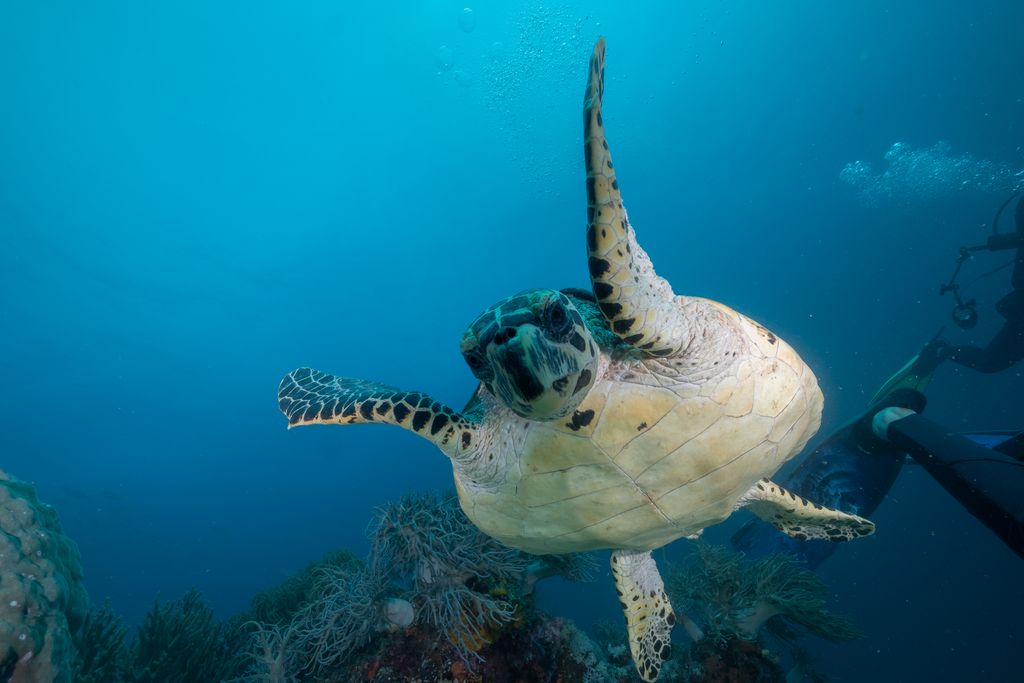
Understanding how different species behave makes it much easier to read their comfort levels. You start to notice when an animal is relaxed, curious, or unsure, and you can adjust how close you get.
This awareness helps you take photos without causing stress and makes your dives feel safer and more thoughtful.
- Signs of stress in common creatures: Look for quick colour shifts, rapid breathing, twitching, fin folding, or repeated attempts to move away. These are cues to pause or back off.
Technique #4 – Strobes, Lights, and Low-Impact Lighting
Lighting can make or break a shot, but it also affects the animals you’re photographing. When you use strobes and torches with a bit of care, you keep your subjects comfortable and your shots more natural.
- When strobes are okay and when they are not: Most fish tolerate occasional strobe use, but avoid flashing sensitive species like pygmy seahorses or stressed cephalopods. If an animal reacts, stop immediately.
- Using natural light gently: In shallow water or clear conditions, natural light produces soft, realistic images. It also removes the risk of startling wildlife.
- Avoiding repeated flashing: Limit burst shots. Take a few well-composed images, then move on. Repeated flashing can change behaviour or drive an animal into hiding.
Technique #5 – Protecting the Environment Beneath You
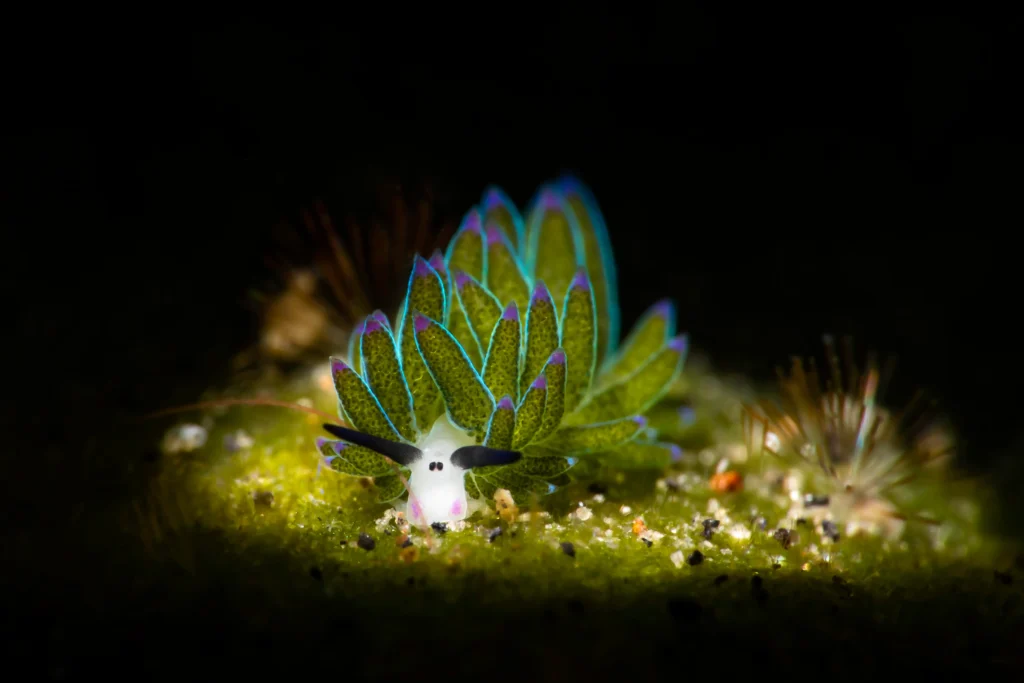
When taking pictures, it’s so easy to be so absorbed in the subject and forget what is happening under your fins or knees. Keeping an eye on where you are in the water is one of the easiest ways to protect the reef and avoid accidental damage.
- No touching, no moving, or repositioning: Never lift, flip, or arrange creatures. Avoid clearing debris or shifting coral for a shot.
- Avoid stirring sand (especially in muck): A single fin kick can bury small creatures or damage the microhabitats that Lembeh is known for.
- Where to place your fins: Keep your fins up and behind you. Kick lightly to avoid contact with coral, rubble, or other divers.
- Controlling currents and surge: Use your fingers on a rock or dead patch only when absolutely necessary. Maintain control so you are not pushed into the reef.
Technique #6 – Capture the Moment Without Changing It
Ethical photography means letting marine life behave naturally. The best images come from patience, not influence.
If you notice a creature shift its path, change its posture, or speed up because of you, it is a gentle cue to pause and reset. Stepping back for a moment often leads to a calmer, more natural encounter.
- Document natural behavior only: Avoid encouraging reactions or manipulating the environment for a dramatic pose.
- Creating images that celebrate, not exploit, marine life: Aim for photos that show the beauty, calm, and truth of the underwater world. Images that respect the subject inspire others to protect it.
Your Photos Can Protect the Ocean
The images you create underwater can do more than fill a gallery. They can help people understand why the ocean needs care. When shared with care, your photos become a form of advocacy that supports conservation and encourages better habits within the dive community.
Raising Awareness
Images of healthy reefs, rare encounters, or delicate habitats can show people what is worth protecting. A clear, honest image can spark curiosity and highlight why these habitats deserve protection.
Telling Stories through Images
Every creature has its own quirks and personality. When you capture natural moments, you tell a story that helps others feel a little closer to the underwater world.
Inspiring Responsible Behavior
People learn from what they see. When your images reflect calm approaches and respectful distance, you can encourage others to dive and photograph with the same care.
Plan an Ethical Diving and Photography Trip With Solitude
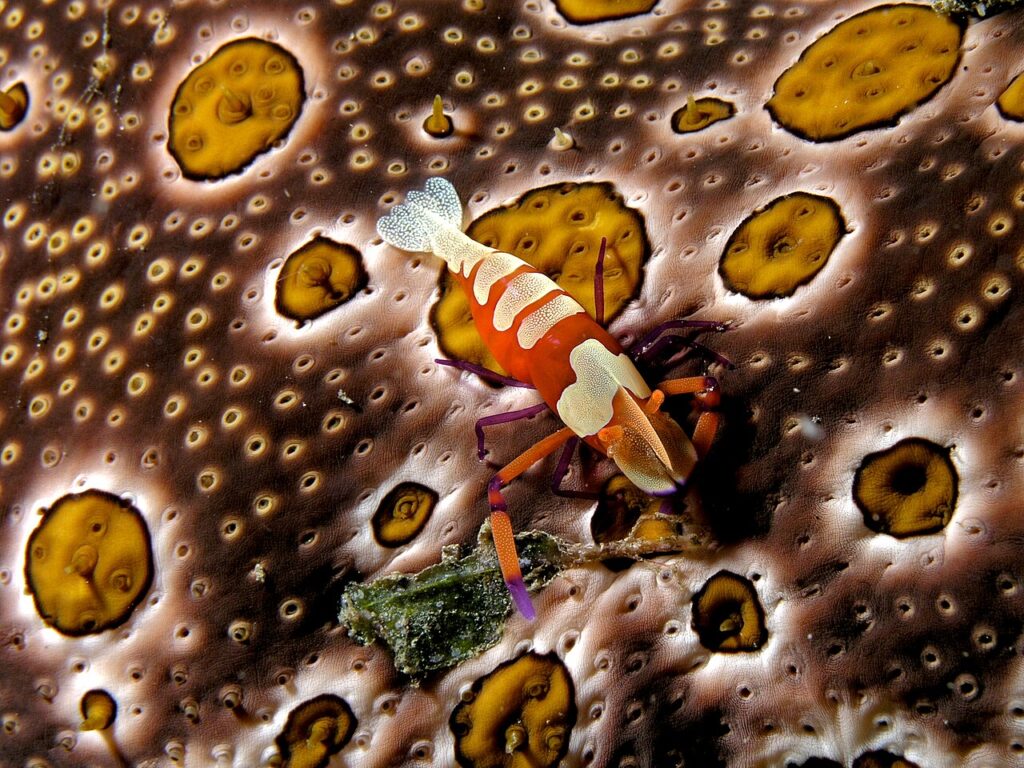
Are you looking to grow as an underwater photographer while keeping your impact low? Come dive with Solitude World’s Liveaboard and Resorts! We can take you to some of the best destinations in Indonesia, the Philippines, and Palau for underwater photography, like Lembeh, Anilao, and more.
Our liveaboards and resorts are equipped with camera facilities, thoughtful dive planning, and photography workshops designed to help you improve without disturbing the environment.
Our team cares deeply about gentle diving and honest storytelling through imagery. If ethical diving matters to you, you will feel at home with us. Join us for calm, respectful, and unforgettable underwater moments.