
Chandelier Cave is a limestone cave system located beneath one of Palau’s rock islands. It’s widely known for its air-filled chambers and striking stalactite formations.
When illuminated, these formations resemble chandeliers, which is how the cave earned its name.
If you’re craving a dive that feels a little different from the usual reef or drift sites, the Chandelier Cave offers a nice change of pace. The route is straightforward, the water stays calm, and the route is simple to follow with a trained guide.
Curious about what kind of experience you’ll get here? Let’s dive deeper into the Chandelier Cave experience.
Where is Chandelier Cave?
Chandelier Cave is located in Malakal Harbor, just a short boat ride from the main dive facilities in Koror, Palau. Most boats reach the site in just a few minutes, making it one of the most accessible dive sites in the region.
Because it’s so close to town and doesn’t require deep diving, many operators schedule it as a third dive of the day or a relaxed late-afternoon dive.
Also Read: Palau Travel Guide 2025: Things to Do, Accommodations & Tips
What to Know About the Chandelier Cave
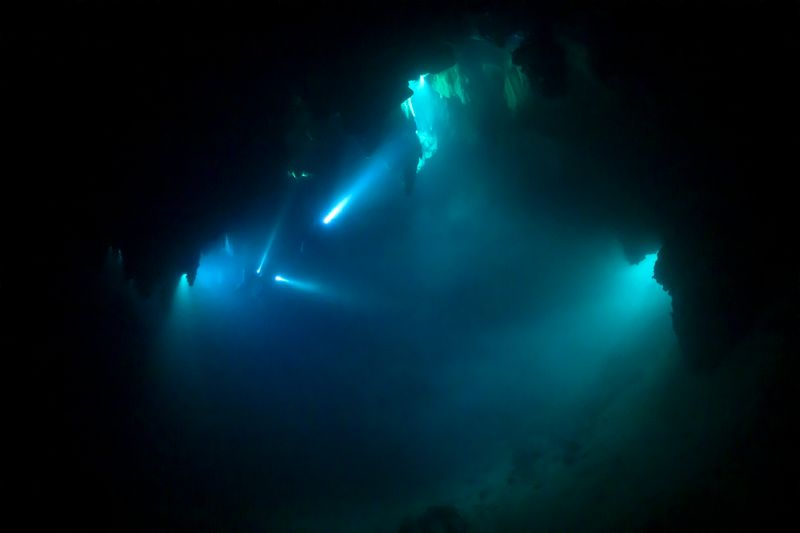
Chandelier Cave consists of five connected chambers. Four have water surfaces with breathable air pockets, while the fifth is dry and accessible only after surfacing inside.
The route is straightforward: divers enter and exit through the same tunnel, which helps maintain orientation and comfort.
Entry and Descent
The dive begins at a shallow depth of around 4 metres (12–13 feet). The entrance passage is wide enough for comfortable finning and buoyancy control. Just outside the opening, you may see rusted World War II depth charges resting on the seabed
They are safe to view and now serve as an interesting historical reminder of Palau’s past.
The Chambers
There are five chambers you can explore in the Chandelier Cave. In Chamber One, the last of the light from the entrance fades, and the space becomes dimmer.
This is usually where divers pause for a moment, settle their breathing, and adjust to the cave environment.
As you continue into Chambers Two and Three, the formations become the main focus. These areas are often called the chandelier rooms because stalactites and stalagmites stretch from the ceiling and floor.
Some even break the surface of the water, creating interesting shapes when lit with a torch.
Around this section, you’ll also notice a halocline. This is where freshwater and saltwater meet, creating a gentle visual distortion. The view may look wavy or slightly blurred, almost as if you’re looking through warm air above a road.
Surfacing Inside the Cave
One of the most unique parts of diving in the Chandelier Cave is the chance to briefly surface in the air pockets. Here, you can take out your regulator, talk with your buddy, and observe the cave formations from a completely different angle.
Marine Life
Wildlife inside the chambers is limited, though you can occasionally find small crabs and sponges lining the walls. The real marine life interest is outside the entrance, revealing interesting species like cardinalfish, soldierfish, and occasionally mandarin fish, making it a pleasant spot for slow, patient photography.
Technical Requirements & Difficulty
Chandelier Cave sits between 10 and 15 meters deep. While it does not require technical cave certification, it is still an overhead environment, meaning divers cannot make a direct ascent in most areas. Because of this, good buoyancy control, trim, and slow movements are important to avoid disturbing sediment or damaging the fragile cave formations.
Some familiarity with cave diving basics can help divers feel more confident, though professional guidance is standard and strongly recommended.
Responsible Diving Tips
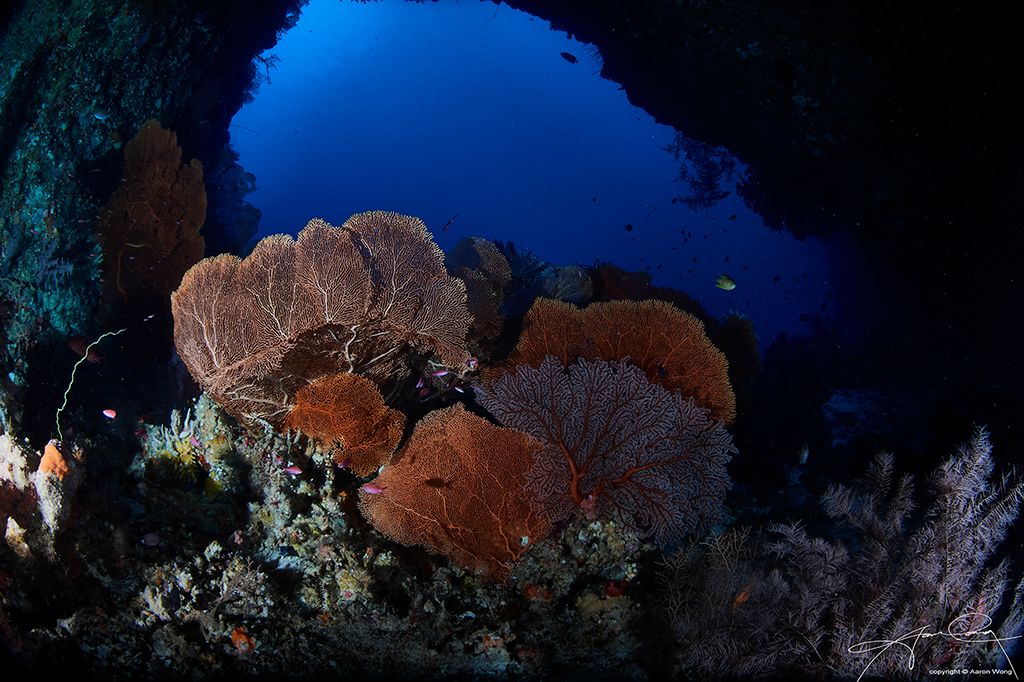
Chandelier Cave offers a wonderful experience for divers looking for something different. The formations inside took thousands of years to form, so it’s important to dive responsibly to help protect the site’s environment.
Here are some responsible and sustainable dive tips you can follow:
- Maintain good buoyancy: Slow, controlled movement helps prevent accidental contact with the cave ceiling, walls, or floor.
- Keep gear streamlined: Secure gauges, hoses, and cameras so nothing drags or bumps against formations.
- Avoid touching anything: Oils from human skin can stop limestone growth, and physical contact can break fragile structures.
- Leave no trace: Observe without altering the environment. Staying aware of your position in the space protects both the site and the experience for the next diver.
Plan Your Palau Dive Trip with Solitude World!
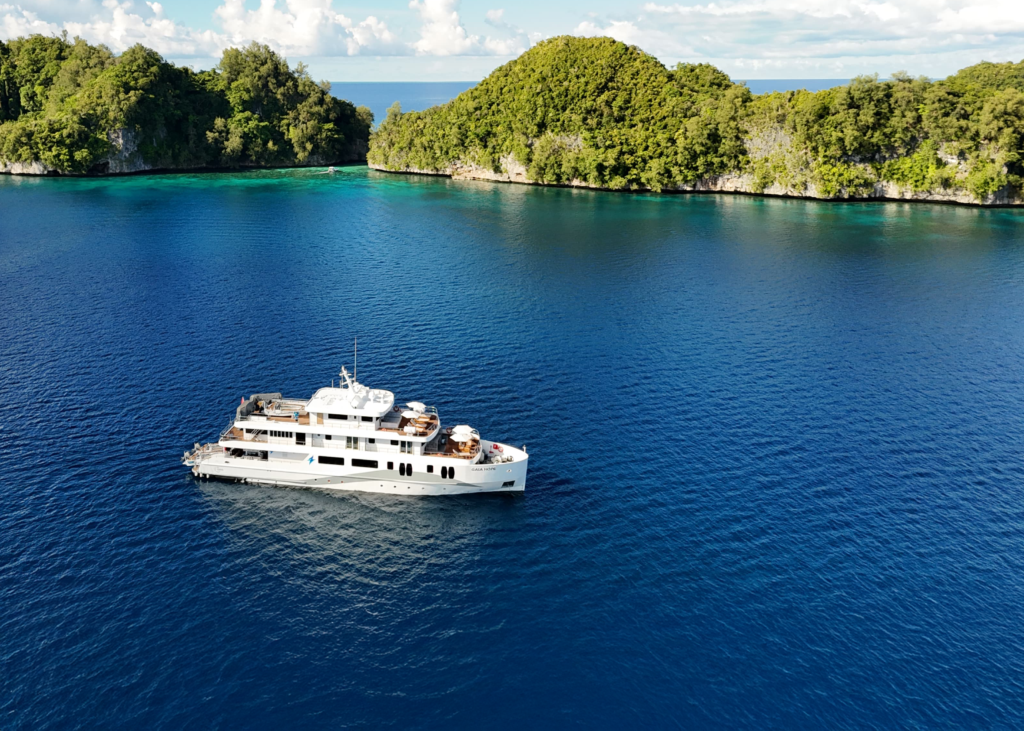
Are you ready to experience Chandelier Cave for yourself? Palau offers some of the most exciting and diverse diving in the Pacific, and this unique site is only the beginning.
Of course, exploring it with a team that truly knows the islands, seasons, and waters makes a difference. At Solitude World Liveaboard and Resorts, we create dive adventures that are exciting and safe, both for you and the ocean!
Our itinerary ensures you get to visit the top dive sites in Palau, so you can truly experience everything the region has to offer. Ready to explore the caves, reefs, and marine life that make Palau unforgettable?