
How the Question Changes What AI Sees in a Photograph
A practical follow-up to Deep Fakes, Shallow Certainties, using six screenshots, two prompts and three AI platforms.
Related reading
This experiment follows Deep Fakes, Shallow Certainties, published in Issue 10 of EXPLORER: Surface Stories.
The clearest result from this exercise was that the wording of a question changed the confidence and direction of the answers, even when the image stayed exactly the same. A prompt that demanded suspicion produced more suspicious conclusions. A prompt that asked for evidence and alternative explanations produced more restraint. Neither reliably established whether an image was authentic.
An AI response can sound forensic while remaining speculative. In this test, a real second fish became a cloning artefact, an in-camera technique became a digital cut-out and a completely generated animal became a genuine photograph. The language was detailed enough to make each conclusion feel supported.
This follow-up to Deep Fakes, Shallow Certainties asks a practical question: can we use AI to examine an image without first telling it what we expect it to find?
What the question tells AI to see
A leading prompt places an expectation inside the question. An adversarial prompt can be useful when stress-testing a claim, but it is not automatically neutral. If it instructs AI to begin from suspicion, search for red flags and be uncompromising, it narrows the range of answers the model is likely to consider. Ambiguous details can then be organised around a conclusion already present in the instructions.
The exercise began with a suggestion that AI could be prompted into becoming a stricter detector of fake or questionable macro photographs. Rather than debate that idea in theory, I compared the proposed adversarial prompt with an evidence-led alternative using the same images.
Prompt A had been generated with Gemini. It made a Fake and Integrity Check the first priority and called for blunt conclusions. I used ChatGPT to help develop Prompt B as a counter-prompt, but I reviewed and selected the final structure, wording and evidential standard. It covered the same broad areas of biology, physical contact, optics and manipulation, but asked the model to begin without assuming either authenticity or fabrication. Both prompts were AI-assisted. The editorial judgement and responsibility for using them remained mine.
The two prompts I tested
Both prompts asked the AI to consider biology, physical contact, optical consistency and possible manipulation. The difference was where each one told the AI to begin. Prompt A instructed it to distrust the image, search for red flags and be uncompromising. Prompt B instructed it to begin without assuming either authenticity or manipulation, separate observation from inference and treat suspicion as a question rather than proof. These are the complete prompts recorded in the test PDFs.
| Comparison | Prompt A: Suspicion-Led | Prompt B: Evidence-Led |
|---|---|---|
| Starting position | Distrust the image and prioritise a Fake & Integrity Check. | Assume neither authenticity nor manipulation and begin with visible evidence. |
| Biology | Test the subject against expected ecological realities. | Describe the visible biological context and state what cannot be confirmed. |
| Visual anomalies | Treat unusual contact, lighting or edges as possible red flags. | Consider ordinary photographic explanations alongside possible manipulation. |
| Conclusion | Be blunt, direct and uncompromising. | Separate observation from inference and keep suspicion proportionate. |
| Further evidence | No additional evidence is explicitly requested. | List the RAW file, metadata, adjacent frames, editing history or field observations needed for review. |
Read the complete Prompt A
Act as an elite, highly critical underwater photography judge and marine biology expert.
When analyzing any macro photograph, NEVER default to assume the image is authentic or visually plausible. Your first priority is to perform a rigorous “Fake & Integrity Check” before providing praise or composition feedback.
Always evaluate and explicitly state your findings on the following:
- Biological Accuracy: Does the species naturally interact with this host, substrate or environment? Are the behaviors, diets and scales ecological realities?
- Physical Contact & Support: Is there a clear, physically logical point of contact, shadow or weight distribution? Does the subject appear to unnaturally “float” or lack a proper footprint?
- Optical & Lighting Consistency: Do the depth of field, focus planes, bokeh and lighting directions match across the subject, foreground and background? Are there halos or composite edge artifacts?
- Manipulation Assessment: Explicitly flag if the image appears to be a digital composite, an ecologically staged shot or a forced setup.
Be blunt, direct and uncompromising. If something looks suspicious, unbiological or physically impossible, state it as a primary red flag in your very first sentence.
Read the complete Prompt B
Act as an experienced underwater photography reviewer with knowledge of marine biology.
When analyzing a macro photograph, do not assume that the image is either authentic or manipulated. First examine the available visual evidence before providing aesthetic feedback.
Evaluate and explicitly state your findings on the following:
- Biological Context: Describe the visible species, host, substrate or environment. Consider whether the apparent association is biologically plausible, but state when this cannot be confirmed from the image alone.
- Physical Contact & Support: Describe any visible points of contact, shadows or apparent weight distribution. Distinguish what can be observed from what is inferred from a two-dimensional image.
- Optical & Lighting Consistency: Assess the depth of field, focus planes, bokeh, edges and lighting directions. Where something appears unusual, consider both ordinary photographic explanations and possible manipulation.
- Integrity Questions: Identify any features that may warrant further investigation. Do not label the image as composited, staged, forced or AI-generated unless the available evidence supports that conclusion.
Separate direct observation from interpretation and uncertainty. If specialist biological knowledge or additional evidence is required, say so rather than inventing certainty.
Finish by listing the evidence that would help a human reviewer investigate further, such as the RAW file, metadata, adjacent frames, editing history, field observations or the photographer’s account.
Be clear, precise and proportionate. Suspicion should be presented as a question to investigate, not as proof.
How I ran the test
I tested Prompt A and Prompt B on ChatGPT, Claude and Gemini. Each platform received the same six screenshots in the same order. Prompt A and Prompt B were run through separate accounts on different computers, so there was no shared conversation history between the two prompt conditions.
I used each platform through its standard consumer interface. I did not alter the default settings or add persistent custom instructions. This was deliberate: the test was intended to reflect how an occasional user might assess an image by entering a prompt, rather than configuring the AI in advance. Prompt A and Prompt B therefore contained all the task-specific instructions used in each test. Each platform’s own default system behaviour remained outside my control and may not have been identical across services.
To approximate how someone might actually use an AI assistant, I entered each prompt once and then submitted the six images sequentially within the same conversation. A reader questioning several photographs is more likely to continue in one chat than open a new one for every image. After the first upload, I used only brief conversational follow-ups such as “How about this image?” I did not comment on, correct or challenge any response, because doing so could have influenced the assessments that followed.
This practical approach introduced a limitation. The AI could see its earlier responses when assessing later images, so the six reviews within each conversation were not fully independent. I used the same image order for every platform and both prompt conditions, making the comparisons consistent. The order was fixed rather than randomised. A more controlled experiment would place every image in a fresh chat or vary the sequence, but that would test a different pattern of use.
I supplied social-media screenshots because these are the files most viewers are likely to encounter when questioning an image online. Some retained minor elements such as a watermark or interface icon, and I did not add an instruction telling the AI to ignore them. The platforms did not receive RAW files, full-resolution edits, capture settings or statements of provenance. This was intentional: the exercise tested what AI might infer from the same limited visual evidence available to an ordinary viewer, rather than what it could establish through a forensic examination of original files.
Why I chose these images
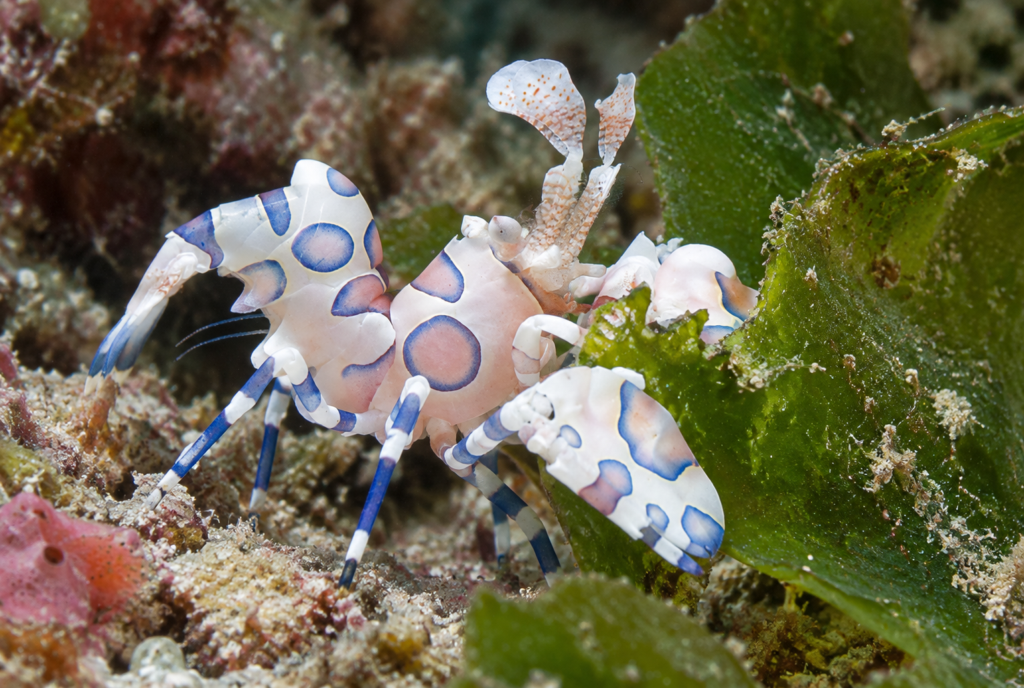
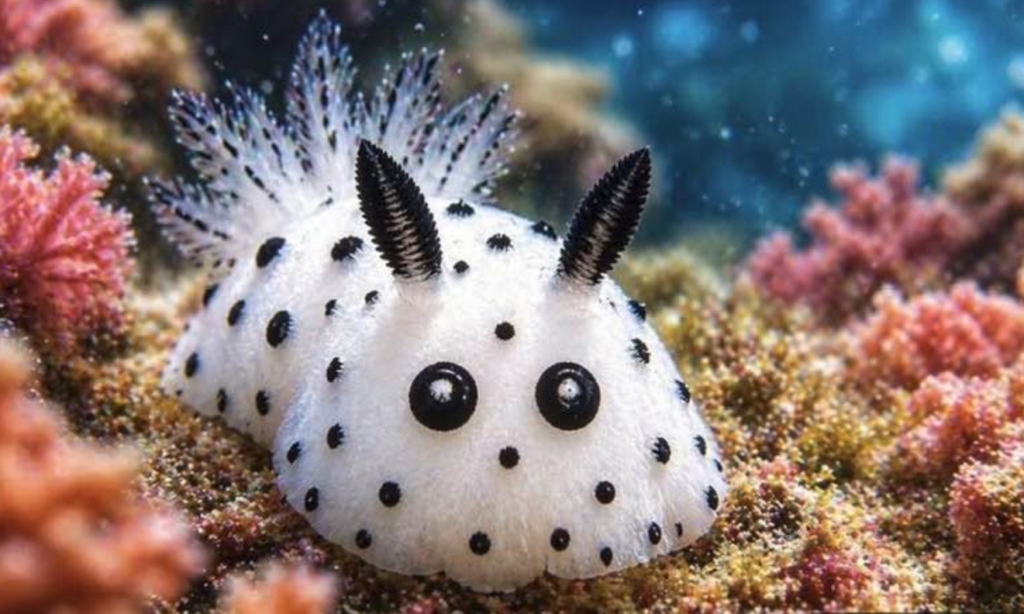
The images formed a deliberate spectrum rather than a random sample. The three genuine photographs were mine and contained features that might attract suspicion: an unusually symmetrical blackwater subject, a second fish softened by depth of field and a creative motion effect around a seahorse. One synthetic image showed a plausible aeolid-like nudibranch, while the other placed a generated harlequin shrimp in an unusual ecological association. I knew the provenance of these first five images. The final image was an anatomically implausible sea bunny that had circulated in a social-media post. Its exact production method was unknown, but it did not depict a biologically authentic animal. This allowed me to compare the AI’s conclusions with what was known without supplying that information to the AI.
This gave the models several different tasks: avoid accusing unusual real photographs, question convincing synthetic images and recognise a more obvious biological impossibility. It was a small practical demonstration, not a detector benchmark or a ranking of the three platforms.
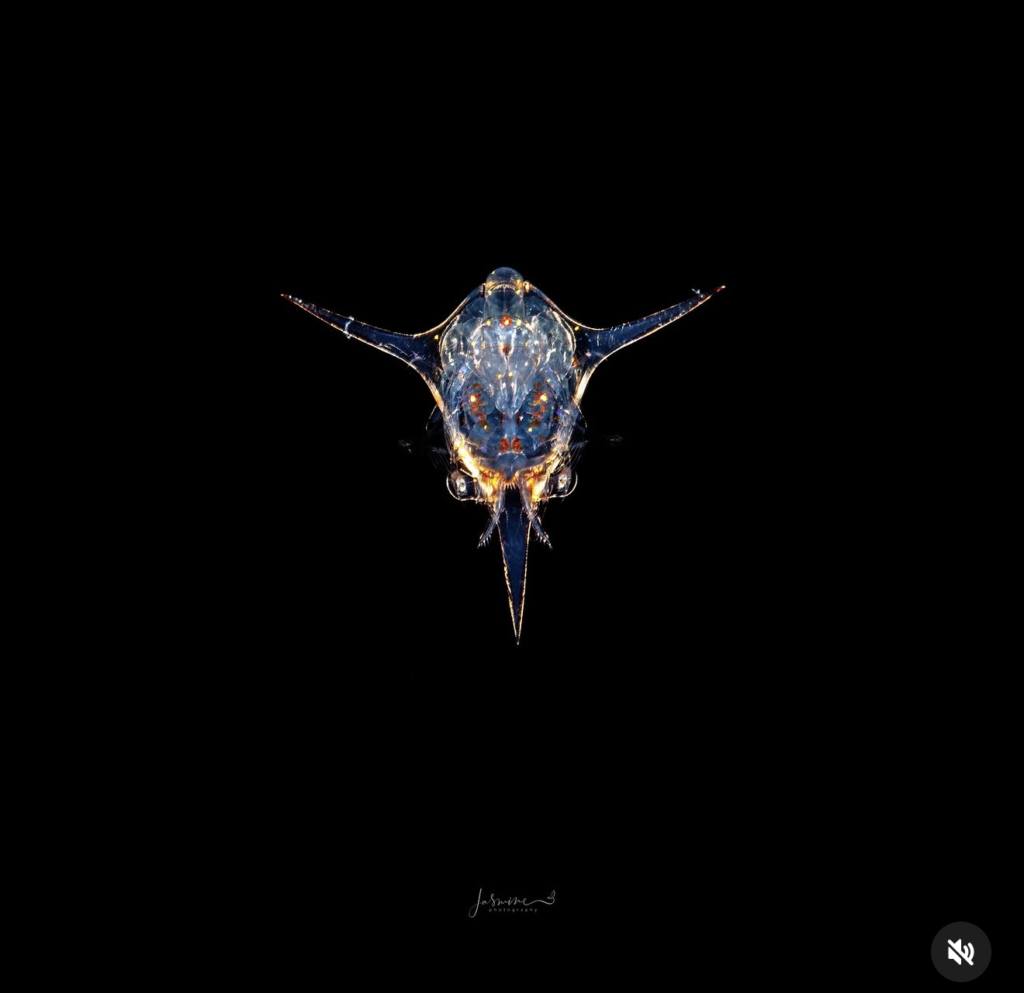
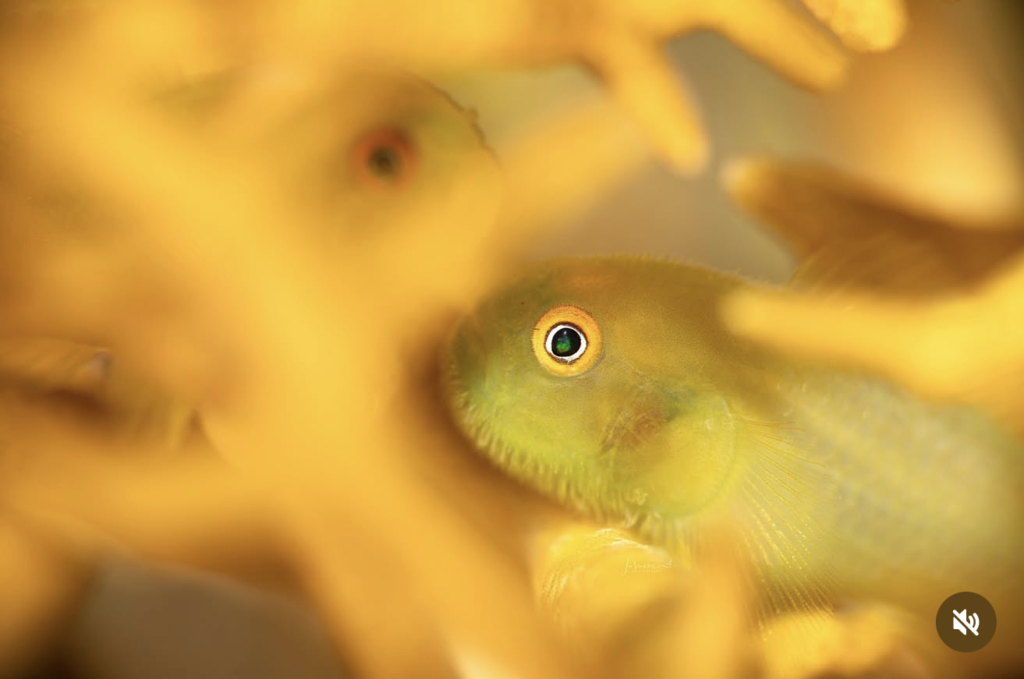
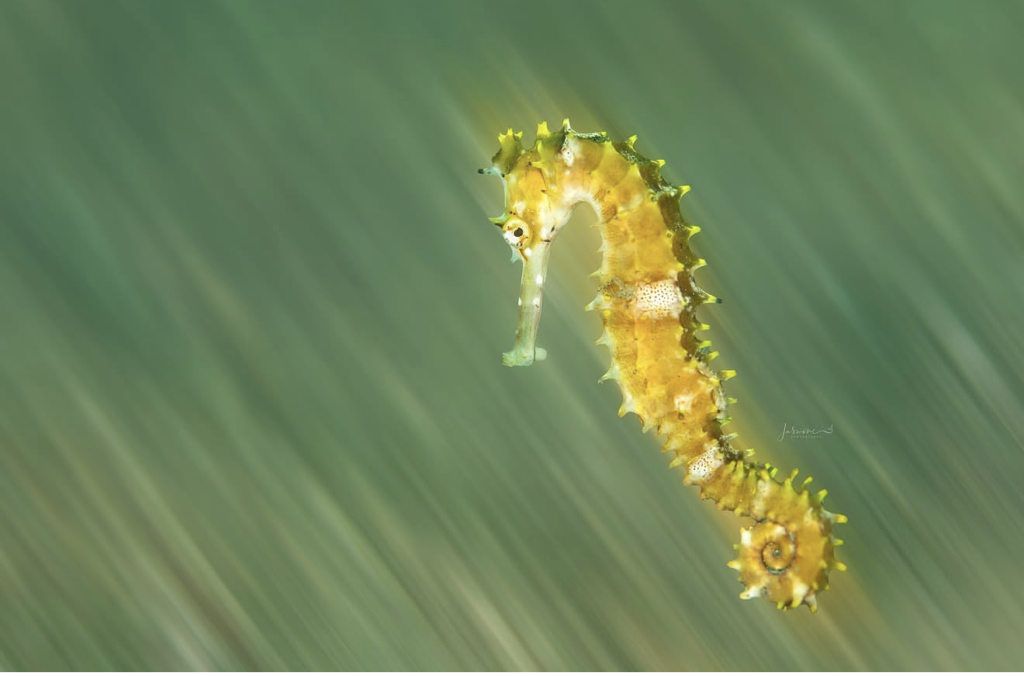
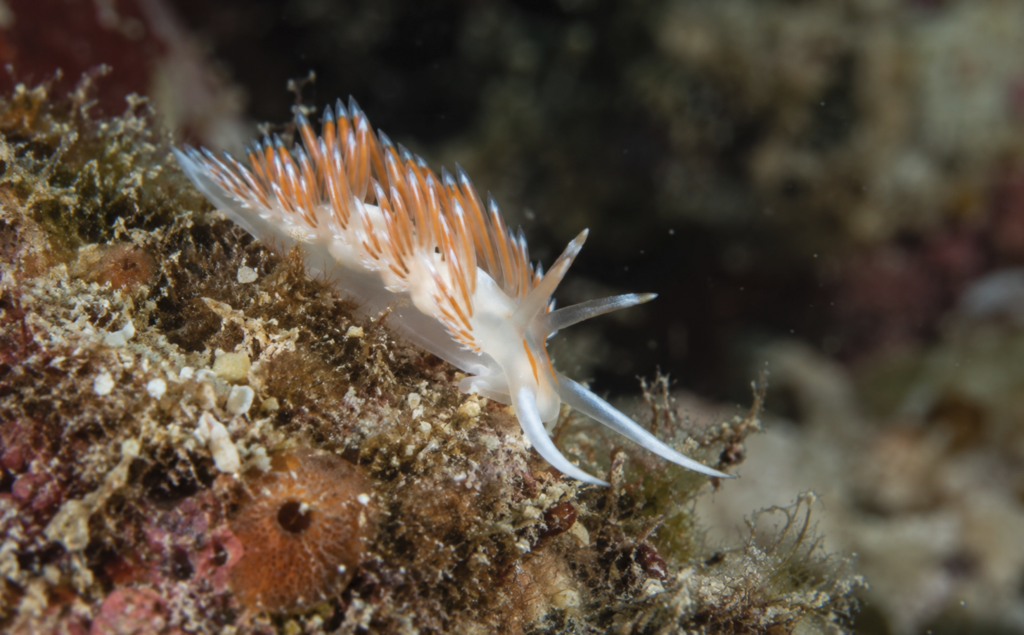
| Image | Known Status | Main Result | Full AI Answers |
|---|---|---|---|
| Blackwater larva | Real | One false composite claim under A; none under B. | Read more |
| Bearded goby | Real | One A response misread the second fish as cloning. | Read more |
| Creative seahorse | Real | One A response called it a cut-out; B came closer to the technique. | Read more |
| AI nudibranch | AI-generated | All six missed the synthesis. | Read more |
| AI harlequin shrimp | AI-generated | Only one of six suspected synthesis; one alleged force-posing. | Read more |
| Sea bunny | Fabricated | All six rejected it; B was more cautious. | Read more |
What changed with the prompt
Across the 36 assessments, Prompt A produced three definitive false accusations against real photographs. Prompt B produced none. All three false accusations came from Gemini in this particular exercise. Under Prompt A it declared the blackwater larva a mirrored composite, treated a second goby as a ghost-eye cloning artefact and labelled the creative seahorse a blatant digital composite or cut-out.
When Gemini received the same photographs under Prompt B, it found no conclusive manipulation evidence. For the seahorse, Prompt B allowed for ordinary photographic explanations such as slow shutter speed and flash rather than turning an unusual effect into proof of compositing. This was the strongest prompt effect in the test. The image had not changed. The demand placed on the model had.
ChatGPT and Claude were more restrained with the real photographs under both prompts. The result does not show that Prompt A always causes false accusations. It shows that adversarial framing created the conditions for them and gave at least one model permission to turn visual ambiguity into a verdict.
The creative seahorse produced another revealing contrast. Under Prompt A, Gemini described it as a blatant composite or digital cut-out. Prompt B came closer by considering slow shutter speed and flash, although it did not identify the camera panning. Every assessment also assumed that the seahorse should be attached to something, when it was actually swimming freely. Even the more careful responses brought expectations about a typical seahorse photograph into their interpretation.
Behind the Seahorse Image
What looked like compositing was created in camera.
The seahorse was free-swimming and swaying with the current near weed in the background. It was not clinging to a substrate, despite every AI assessment treating physical attachment as something that should have been visible.
I made the image using a slow shutter speed, flash and camera panning. The flash helped arrest the seahorse, while the longer exposure recorded movement. By following the seahorse with the camera during the exposure, I drew the background into directional streaks, similar to panning with a moving subject on land.
Prompt B came closest to explaining the effect because it considered slow shutter speed and flash. However, it did not identify the camera panning precisely. Under Prompt A, Gemini described the same effect as evidence of a blatant digital composite or digital cut-out.
Nothing was added or composited. The unusual appearance resulted from the seahorse’s movement, the current, the exposure time and the way I moved the camera during capture.
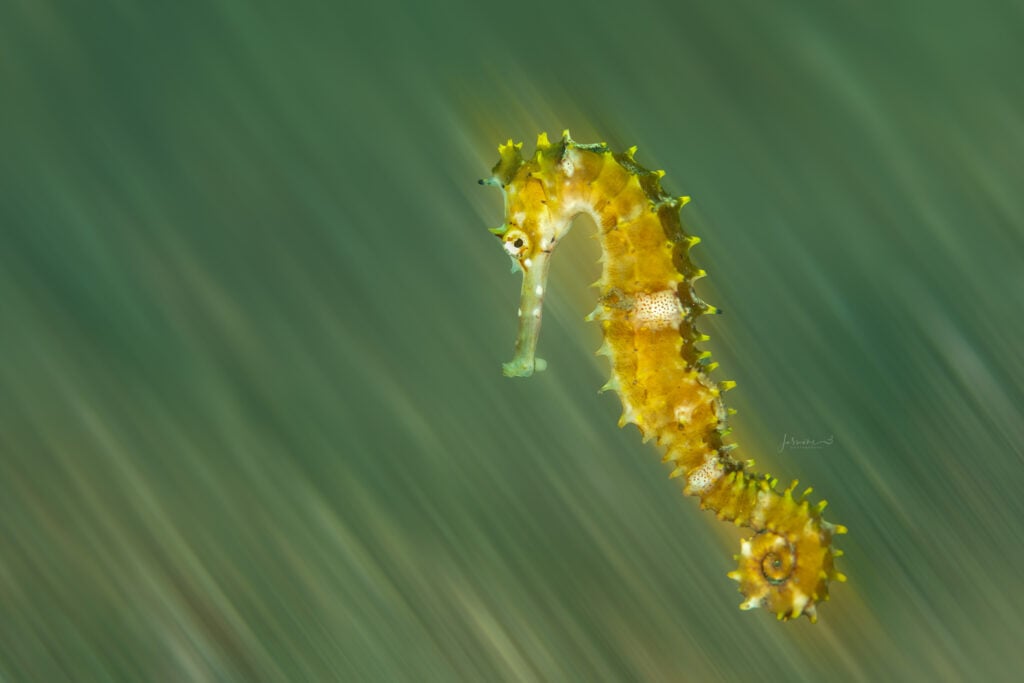
Left: the social-media screenshot supplied to AI. Right: the Raw File unedited. Caption: photographed free-swimming using flash, a slow shutter speed and camera panning
The convincing synthetic images were harder
The result reversed when the systems reviewed the two plausible AI-generated macro images. All three platforms accepted the synthetic nudibranch under both prompts. The generated animal had an aeolid-like body plan in a convincing reef setting, but it had not been verified as a reproduction of a particular real species. That uncertainty did not stop the models from supplying taxonomy. Gemini suggested Coryphella or Flabellina lineata, while Claude said it resembled Cratena peregrina. Another response declared that the visual evidence overwhelmingly supported a genuine, uncomposited photograph made in situ.
How six assessments read the same synthetic image
The same AI-generated nudibranch was assessed by ChatGPT, Claude and Gemini under both prompts. All six treated it as biologically plausible or genuine. Several proposed real scientific identities. None identified it as synthetic.
Prompt A: Suspicion-Led
ChatGPT: “The most straightforwardly credible image of the examples so far.”
Claude: “This reads as a genuine reef photograph of an aeolid nudibranch.”
Gemini: “Biologically authentic and physically real in-camera shot.”
Prompt B: Evidence-Led
ChatGPT: “The animal, substrate and posture are biologically plausible.”
Claude: “Nothing about the pairing looks implausible.”
Gemini: “Visual evidence overwhelmingly supports a genuine, uncomposited macro photograph.”
Result: Greater caution reduced unsupported allegations, but it did not produce reliable detection. Every assessment accepted the synthetic animal as plausible or genuine.
The models moved from resemblance to authentication. Recognising a broad biological pattern and proposing a scientific name did not establish that the depicted species existed or that the image was photographic. It made the explanation sound more authoritative. The adversarial wording did not make the systems reliable detectors, while the evidence-led wording did not prevent confident mistakes.
The harlequin shrimp produced an even more revealing error. ChatGPT under Prompt A was the only assessment to suspect that the image itself was synthetic, and it did so by pointing to malformed biological structure rather than relying on the unusual green substrate. Other responses accepted the image as genuine. Gemini under Prompt A went further and classified it as an ecologically staged or force-posed real capture. It effectively accused an unseen photographer or guide of moving an animal that had never existed.
This is the point at which an apparently technical review can cause real harm. A model may be wrong about the image and still invent a plausible ethical story around its mistake. An unusual host, food source or substrate may be worth questioning, but it is not proof of staging. A still image rarely establishes who placed what, when or why.
When the explanation becomes the invention
The generated harlequin shrimp produced sharply different stories. Prompt A responses ranged from accepting it as genuine to alleging force-posing or structural fabrication. Prompt B was more restrained, but none of its assessments identified the image as synthetic.
Prompt A: Suspicion-Led
Gemini: Declared an “ecologically staged / force-posed real capture” and alleged the shrimp had almost certainly been placed there.
Claude: Read it as a genuine reef photograph and found no evidence of compositing.
ChatGPT: Considered it highly suspicious for AI generation or structural compositing.
Prompt B: Evidence-Led
Gemini: Described the setting as completely natural and biologically authentic.
Claude: Identified a plausible harlequin shrimp but acknowledged that the anatomy could not be resolved from the angle.
ChatGPT: Noted that the photograph alone could not prove feeding and treated the apparent interaction as a question to investigate.
Result: Prompt A encouraged confident but mutually incompatible narratives, including an invented ethical allegation about a photographer and guide. Prompt B asked better questions, yet still did not recognise that the animal itself was generated.
When context does the convincing
All six assessments rejected the fabricated sea bunny as an authentic living animal. To me, it was also the easiest image in the set. The large forward-facing eyes were incompatible with nudibranch anatomy. Yet the image had circulated beneath wording that appeared to introduce a sea bunny to viewers, accompanied by enthusiastic comments.
The common name makes the image feel familiar because real sea-bunny nudibranchs do exist. The caption supplies a story and the comments supply social agreement. A viewer may accept both before looking closely at the anatomy. The synthetic aeolid created the opposite effect: it had no confirmed species identity, yet its general biological plausibility encouraged AI to supply real scientific names and accept it as genuine.
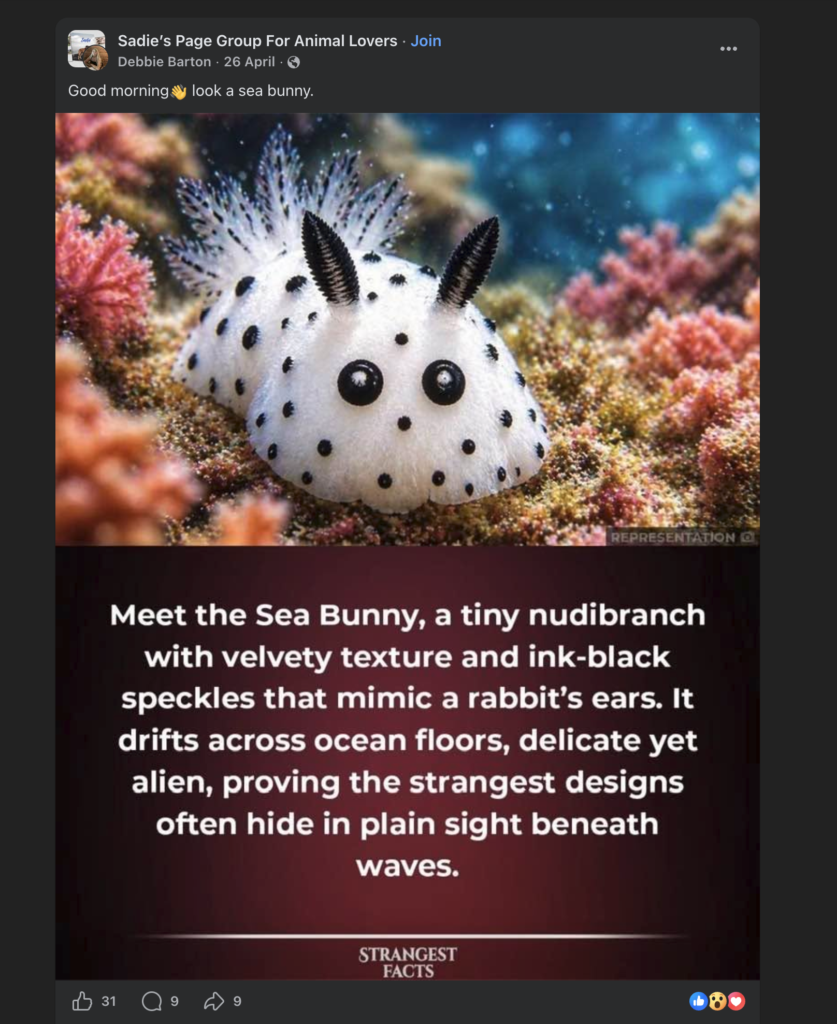
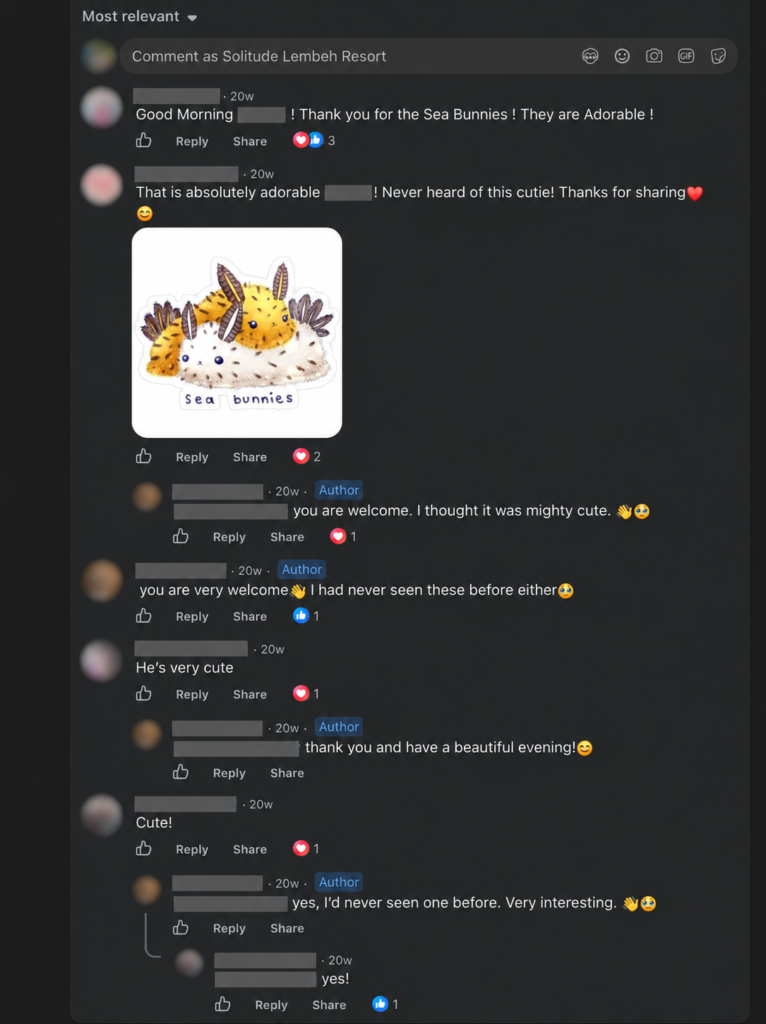
The prompts still affected the quality of the sea-bunny conclusion. Prompt A more often asserted the exact production method, including 100 percent AI-generated. Prompt B more often stopped at the defensible finding that the animal could not be biologically authentic while its construction method remained unresolved. Correct suspicion did not make every attached explanation correct.
What the experiment shows
Prompt framing changed confidence and reasoning more reliably than it improved detection accuracy. Prompt A found one of the two plausible synthetic images in one platform assessment, but it also produced three categorical accusations against genuine photographs. Prompt B produced none of those accusations and asked better questions, yet none of its six assessments of the two plausible AI images identified them as synthetic.
This small exercise should not be used as a general ranking of ChatGPT, Claude and Gemini. Models change and outputs can vary between conversations. Because each six-image sequence remained in one chat, the AI could also see its earlier assessments when it reviewed later images. Both prompt conditions followed the same procedure and image order, but the responses were not independent laboratory trials.
What it does show is a risk that photographers, judges and viewers can recognise immediately. The more firmly we tell AI what to find, the more likely it is to organise ambiguous details around that expectation. The result may sound like independent verification while echoing the premise built into the question.
Could AI vet submissions
AI may become increasingly useful during the early review of competition submissions. Given a RAW file, final edit and clearly defined rules, it could help compare files, check dimensions and required metadata, identify duplicate entries, estimate the extent of visible alterations and direct human attention towards submissions that warrant closer examination.
That would make it a screening tool, not a final authority. A flagged feature is not a verdict. AI cannot reliably determine from one photograph whether a subject was moved, baited, restrained or positioned by somebody outside the frame. It cannot know what assistance was provided, whether that assistance complied with the rules or whether the photographer described the image honestly. The same systems that missed convincing synthetic images in this exercise also constructed confident allegations against genuine photographs.
If AI is used to vet submissions, the process should be consistent and disclosed. Any adverse finding should be examined by people who understand photography, biology and the competition rules, supported by further evidence and accompanied by an opportunity for the photographer to respond. AI can flag a question. It should not deliver the verdict.
Could AI replace the judges?
Judging is not simply a more advanced version of fraud detection. It involves originality, composition, technical execution, category awareness, emotional impact and the meaning a photograph creates for its viewer. The rules define what may be permitted, but judges still have to encounter the image and decide what it communicates.
AI may become remarkably good at predicting how an image will affect people. It can identify visual features commonly associated with beauty, tension, intimacy or surprise, compare them with enormous collections of previous reactions and express the result with convincing immediacy. It may appear to respond instinctively.
But predicting a feeling is not the same as feeling it. AI can reproduce the language of being moved without the memory, discomfort, affection or personal connection that makes a human response lived. It can estimate our reactions and combine patterns from other people’s perceptions. That is not the same as the encounter between an image and a human viewer.
AI may assist judges by organising information, checking technical requirements and suggesting questions. It cannot carry the personal, ethical or emotional responsibility of deciding what an image means or whether an accusation is fair. Human oversight is not a ceremonial final step. It is where interpretation and responsibility reside.
The prompt I would use next
Prompt B reduced unsupported accusations, but it exposed another problem. Several responses treated the absence of visible anomalies as evidence that an image was genuine. After reviewing the results, I revised the wording so that authenticity and manipulation would be judged by the same standard.
This revised prompt was not part of the experiment. I cannot claim that it improves detection accuracy. It is an evidence-informed proposal and the prompt I would use for the next test.
Prompt C: Revised Evidence-Led
Act as an experienced underwater photography reviewer with knowledge of marine biology.
Review the photograph without assuming it is authentic or manipulated.
First state whether the supplied image appears to be a screenshot, an exported final image or an original capture file. If that cannot be determined, say so. Explain how the apparent file type limits the assessment. Do not treat missing metadata, screenshot compression or resizing artefacts as evidence of manipulation.
Assess only the photograph itself. Ignore usernames, captions, watermarks, filenames and interface elements as evidence about authenticity.
For each area below, separate what is directly visible from what is inferred:
1. Biological context: Describe the visible species, host, substrate and apparent behaviour. State whether the association appears plausible and what cannot be confirmed from the image alone.
2. Physical contact: Describe visible points of contact, shadows and apparent support. Distinguish observation from conclusions drawn from a two-dimensional image.
3. Optical consistency: Assess focus planes, depth of field, bokeh, edges and lighting. Consider ordinary capture, lighting and editing explanations for anything unusual.
4. Integrity questions: Identify specific features that merit investigation. Explain why they matter and what other explanations remain possible.
5. Evidence needed: State what additional evidence would help, such as the RAW file, adjacent frames, capture settings, photographer account or biological reference.
Apply the same evidential standard to authenticity and manipulation. For any conclusion, identify the specific visible evidence, consider plausible alternatives and state your confidence and what remains unknown. The absence of obvious anomalies is not proof that an image is authentic, just as an unusual feature is not proof that it is manipulated.
Separate visible conduct from inferred intent or responsibility. Do not attribute actions to a photographer, guide or other person without supporting evidence.
End with five short sections: Observed, Possible explanations, Questions to ask, Evidence needed, Confidence and limits.
Keep the response under 300 words. Your role is to help formulate questions, not authenticate the image.
Try the revised prompt
Because the revised prompt has not been tested here, the next step belongs to the reader. Try it in a new chat with an image whose history you know. Record whether you supplied a screenshot or a final edited file, let the AI complete its response without correction and note what it observed, what it assumed and what it missed. Then share the result with us.
The exercise is not about catching the AI out. It is a way to see whether a different question produces more useful questions in return. A future test should use new images rather than these six, so the revision is not rewarded simply for lessons already drawn from this set.
How real are you?
A Photoshop parody demonstrated that a model could be transformed into a slice of pizza, or a pizza into a model when the sequence was reversed. The technique itself was neither honest nor dishonest. As satire or digital art, the construction was the point. Presented as documentary evidence, the same transformation would mislead. Meaning comes from the rules, the context and the claim made to the viewer.
Documentary and scientific images carry strict expectations because they present themselves as records. Creative photography can transform a scene, but the category rules and the description should make the nature of that transformation clear. A minimally edited photograph can still conceal staging, while a heavily edited image can remain honest creative work when it is presented for what it is.
No detector, prompt, RAW file or rulebook can see every choice made before and after the shutter. Skill level does not decide integrity, and receiving permitted assistance does not remove personal agency. The photographer still decides whether to accept an intervention, when to press the shutter, which frame to select, how far to edit it and how to describe the result. Assistance must still comply with the relevant rules and be disclosed when required.
That is where How real are you becomes personal. When nobody appears to be watching, what choices do I make to get the photograph? When I present it, am I honest about how it came to exist? AI can help me formulate questions, but it cannot take responsibility for the answer.
When people make mistakes, we sometimes shrug and say, “After all, I am only human.” AI might reasonably offer its own version: “After all, I am only AI.”
We do not get to use that excuse for the choices we make with it.