
For many divers, diving in Indonesia offers an experience unlike any other, which is why this stunning archipelago is on many people’s bucket lists. However, Indonesia is not a plug-and-play destination where every site is easy.
In Indonesia, no two regions behave the same way underwater. Some areas offer thrilling drifts and complex reef systems, while others are calmer, perfect for critter hunting. A good dive experience here depends on matching your training, comfort level, and expectations with the water itself.
Unsure of where to start? This guide is created to help you plan your dive trip to Indonesia. Read on to find out which popular dive sites match your skill and comfort, and how to plan the perfect itinerary.
Best Dive Sites in Indonesia
With such a vast area and so many dive sites, which one should you go to? Below is a list of popular dive sites in Indonesia and their characteristics to help you make a more informed decision.
1. Raja Ampat

Few places in this world have a staggering amount of marine biodiversity as Raja Ampat. The region combines healthy coral reefs, dense fish life, and large animals in one interconnected ecosystem. Every dive feels full, active, and constantly changing.
Marine Life Highlights
Manta rays are the most sought-after sight here, and you’ll have ample opportunity to see them gliding over cleaning stations, where they often remain for extended periods. You can also spot large schools of barracuda and bigeye trevally along the channels, and wobbegong sharks resting under coral ledges.
Diving Conditions
Dive sites range from gentle reefs and coral gardens to pinnacles and narrow channels. Currents vary by location and timing, with some sites remaining calm while others demand strong awareness and control. Planning dives around tides plays an important role here. The best time to dive in Raja Ampat runs between October and April. Seas are generally calmer, and access to remote areas becomes more reliable.
Experience Level
Raja Ampat suits intermediate to advanced divers. Many sites involve currents, open water ascents, or complex navigation. Divers with solid buoyancy and situational awareness gain the most from what this region offers.
2. Lembeh Strait
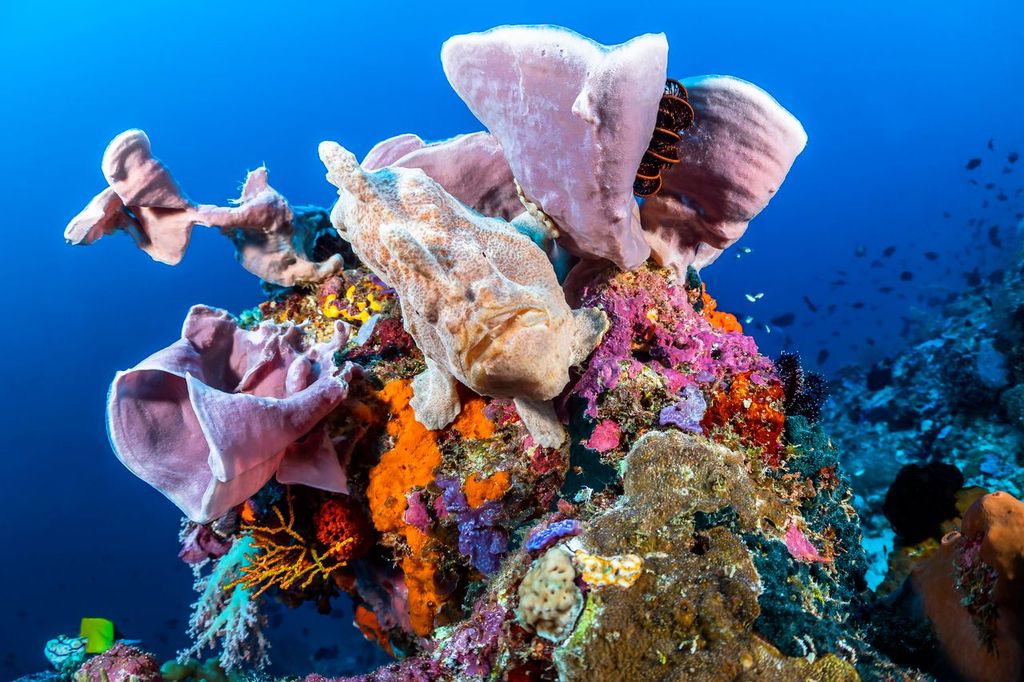
Lembeh Strait is known worldwide for macro and muck diving. Instead of coral walls or big animals, dives focus on small, well-camouflaged creatures living on black volcanic sand. It is a place where you can experience the most rewarding encounters by moving slowly and carefully.
Marine Life Highlights
The strait is home to some of the rarest sea critters. You can expect regular encounters with frogfish, flamboyant cuttlefish, mimic and wunderpus octopus, rhinopias, and countless nudibranchs. Many of these animals are found nowhere else with such consistency.
Diving Conditions
Lembeh’s sheltered geography keeps conditions calm and predictable. Most dives are shallow, currents are mild, and the dark sand makes marine life easier to spot once your eyes adjust. Visibility is good year-round, with clearer water typically between April and October.
Experience Level
Lembeh is suitable for divers of all levels, including beginners. Good buoyancy control matters more here than depth or strength, as staying still protects both the animals and the dive experience. It is also an excellent training ground for precision and control.
3. Bunaken
Bunaken is best known for its beautiful coral walls and large turtle populations. The reefs drop straight down, creating long, relaxed wall dives with plenty to see at every depth. It is one of North Sulawesi’s most accessible and visually striking dive areas.
Marine Life Highlights
Green sea turtles are a regular encounter here, often seen resting on ledges or swimming slowly along the wall. You can also expect to see hawksbill turtles, dense schools of reef fish, and healthy coral growth. Occasionally, reef sharks would show up as well, especially along deeper sections of the wall.
Diving Conditions
Most dives follow vertical walls with deep drop-offs that fall into blue water. Visibility is generally good, making it easy to enjoy the scale of the reef and spot turtles cruising past. Conditions are usually stable, though currents can vary depending on the site. Diving is possible year-round, with the best conditions typically falling between March or April and October.
Experience Level
Bunaken suits a wide range of divers. If you’re a beginner, you can explore the calmer sites around Bunaken Island. More experienced divers usually head toward Manado Tua, where stronger currents and deeper profiles add complexity.
4. Alor

Alor is one of Indonesia’s least explored dive regions. Its isolation limits pressure on the reefs, keeping coral structures intact and fish life abundant. Dives here feels quieter, away from the crowd that you may often find in more popular dive destinations
Marine Life Highlights
Large reef fish dominate the reefs, with sharks appearing along current-facing edges and deeper walls. Macro life hides among coral and rock, rewarding divers who slow down between pelagic moments. Dolphins and whales pass through the area seasonally, especially during crossings between sites.
Diving Conditions
Alor sits at the meeting point of strong water movement, creating frequent currents and sudden temperature changes. Thermoclines can appear without warning, especially on deeper or exposed dives. Walls, slopes, and open water transitions require steady control and awareness. The best diving season runs between April and November. Seas stay more stable during this period, allowing access to remote sites across the region.
Experience Level
Alor suits advanced divers with solid current experience. Many dives involve depth changes, shifting flow, and limited shelter. Comfort in variable conditions plays a key role in enjoying this region.
5. Komodo Islands

Komodo National Park is a UNESCO-listed site surrounded by powerful tidal flow. Nutrient-rich water moves between the Indian and Pacific Oceans, creating ideal conditions for large marine life. Diving here feels dynamic, fast-paced, and highly rewarding for experienced divers.
Marine Life Highlights
Manta rays are the main draw, often seen feeding or circling cleaning stations in groups. Reef sharks patrol current-swept corners, while jacks and trevally form dense schools that move like a single body. Pelagic sightings increase during strong current phases, especially at exposed sites.
Diving Conditions
Most dives in Komodo are drift dives driven by strong and shifting tidal currents. Timing matters, as conditions can change quickly within the same site. The water carries high nutrients, which fuel marine life but can also reduce visibility at times. The best diving season generally runs between April and October. Northern Komodo tends to stay warmer and clearer, while southern sites experience cooler water with stronger upwellings and higher manta activity.
Experience Level
Advanced certification and strong current experience are recommended in Komodo. Many dives require precise entries, controlled descents, and situational awareness throughout the drift. This destination is suitable for confident, capable divers.
Start Your Diving Journey in Indonesia with Solitude World

Indonesia offers extraordinary diving, but the best experiences come from thoughtful planning and realistic expectations. Each region rewards a different type of diver, and taking time to align conditions, season, and experience level makes a clear difference once you are underwater.
Looking for the right partner for your dive adventure? Solitude World Liveaboard and Resorts operates across Indonesia’s most distinctive dive regions, including Raja Ampat, Komodo Islands, Lembeh Strait, and more. Our experienced, local dive guides possess a deep understanding of regional conditions and seasonal changes, helping shape each trip around the realities of diving in Indonesia.
Book your next stay with us here today!