
The Banda Sea is a deep, remote marine area in the Maluku archipelago in eastern Indonesia, where the ocean floor drops to over 6,000 metres, and the reefs above it remain largely untouched by commercial traffic.
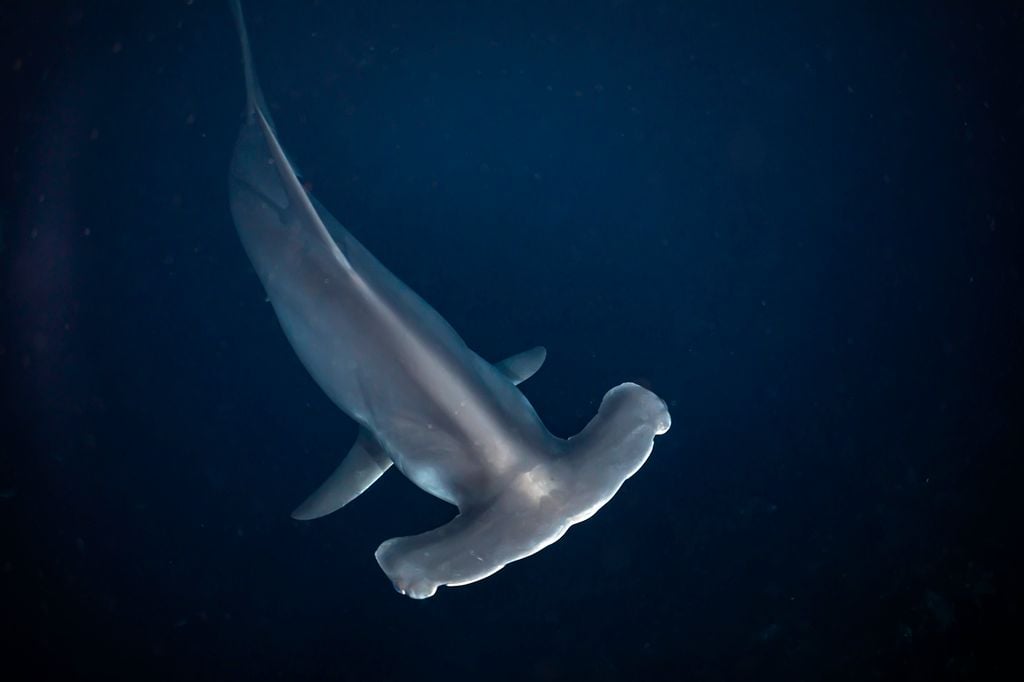
Its isolation has preserved reef systems in ways that are increasingly rare in Southeast Asia, keeping walls, seamounts, and open-water dive sites in genuinely good condition. Divers come here for that pristine environment, and for the real possibility of encountering large aggregations of scalloped hammerhead sharks (Sphyrna lewini) during the right season.
Read on to find out when to go, what conditions to expect, and whether diving in the Banda Sea belongs on your bucket list.
What Is Diving in the Banda Sea Really Like?

Diving in the Banda Sea is defined by open-ocean exposure and depth. Most sites sit along volcanic walls and seamounts rather than shallow coral gardens, and dives regularly reach 25 to 40 metres where current and thermocline activity are more pronounced.
The underwater landscape is dominated by steep drop-offs, hard coral formations, and large pelagic species moving through open water. Visibility averages 20 to 30 metres on good days, often reaching 40 metres in peak season, but surface swells and current shifts are part of the experience rather than exceptions.
It suits divers who are comfortable in open water, relaxed about variable conditions, and more interested in what the ocean does naturally than in predictable, sheltered reef diving.
Why You Should Dive in the Banda Sea
While destinations like Komodo and Raja Ampat are widely recognized among Indonesia’s most popular dive regions, the Banda Sea offers a distinctly different experience, especially for divers seeking truly remote and uncrowded waters.
Its geographic isolation and significantly lower diver traffic have helped preserve the marine environment, allowing reefs and ecosystems to remain exceptionally clean and undisturbed.
Located in the heart of the Coral Triangle, the world’s richest marine biodiversity region, the Banda Sea is home to a wide variety of marine life. Its underwater landscapes are equally varied, shaped by volcanic geology, steep drop-offs, and deep-water upwellings that bring nutrient-rich currents to the reefs.
These conditions sustain thriving ecosystems and attract everything from vibrant reef species to large pelagic visitors.
Marine Life in the Banda Sea
The marine biodiversity in the Banda Sea is exceptionally diverse, influenced by the currents, depth, and seasonal upwellings. However, it’s important to remember that what you’ll encounter depends on when you dive, and the underwater conditions.
In general, you can expect to see:
1. Hammerhead Sharks and Other Pelagic Species
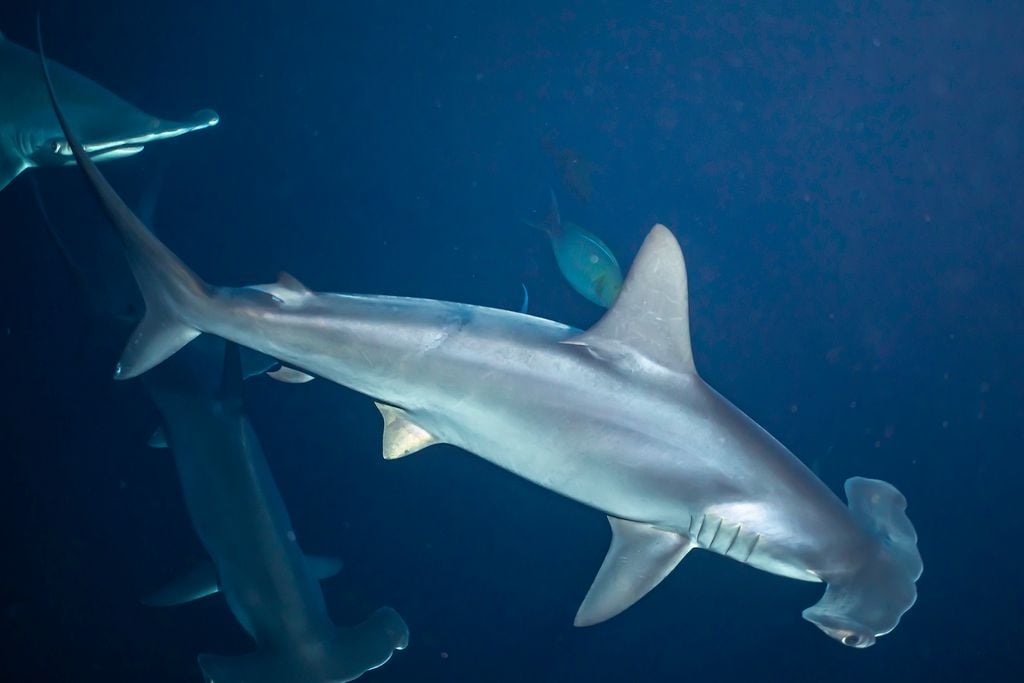
The Banda Sea’s deep ocean trenches and offshore seamounts create the kind of environment that pulls pelagic species up into diveable range. Schooling scalloped hammerheads (Sphyrna lewini), dogtooth tuna, and whale sharks (Rhincodon typus) all pass through here, drawn by the currents and nutrients that concentrate around the Banda Islands’ deep-water passes.
That said, these encounters are seasonal and tied to thermocline movement, so they are not guaranteed on every trip. The same conditions that make pelagic sightings possible are what make the Banda Sea exciting to dive in the first place, and coming in with realistic expectations is part of getting the most out of it.
2. Reef Fish and Macro Life
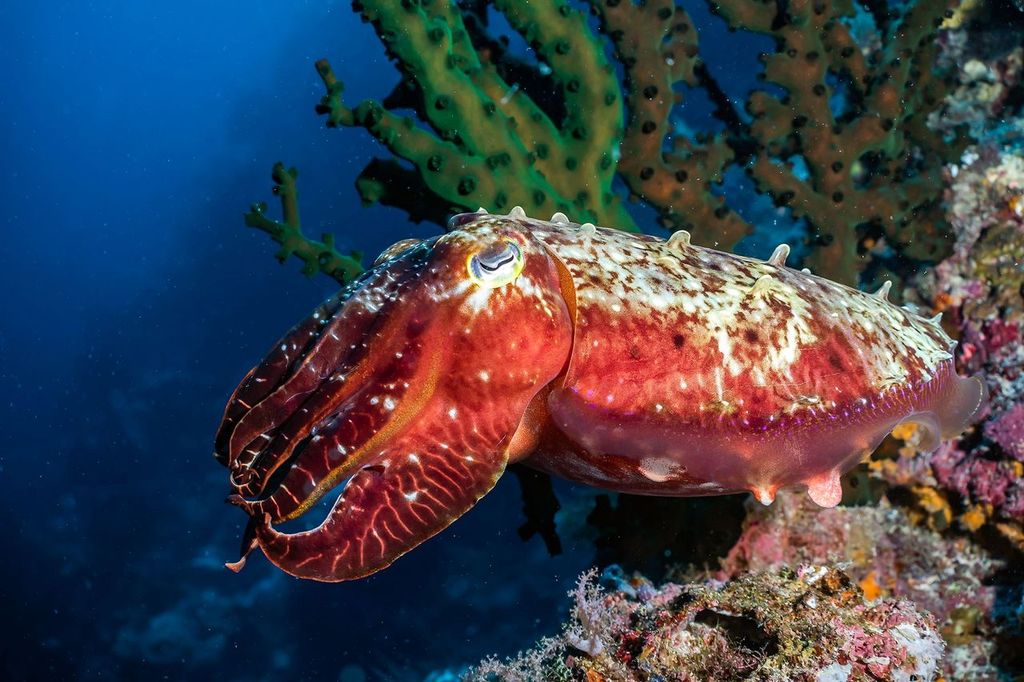
The Banda Sea is known for the big animals, but there is plenty happening at smaller scales, too. On calmer sites with less current, reef edges and slopes, you can find various sea critters, including nudibranchs, ghost pipefish, pygmy seahorses, and other reef fish.
Not every dive here needs to be about pelagics. Sometimes the most interesting thing on the reef is the one you almost missed.
3. Volcanic Seascapes and Their Influence on Marine Life
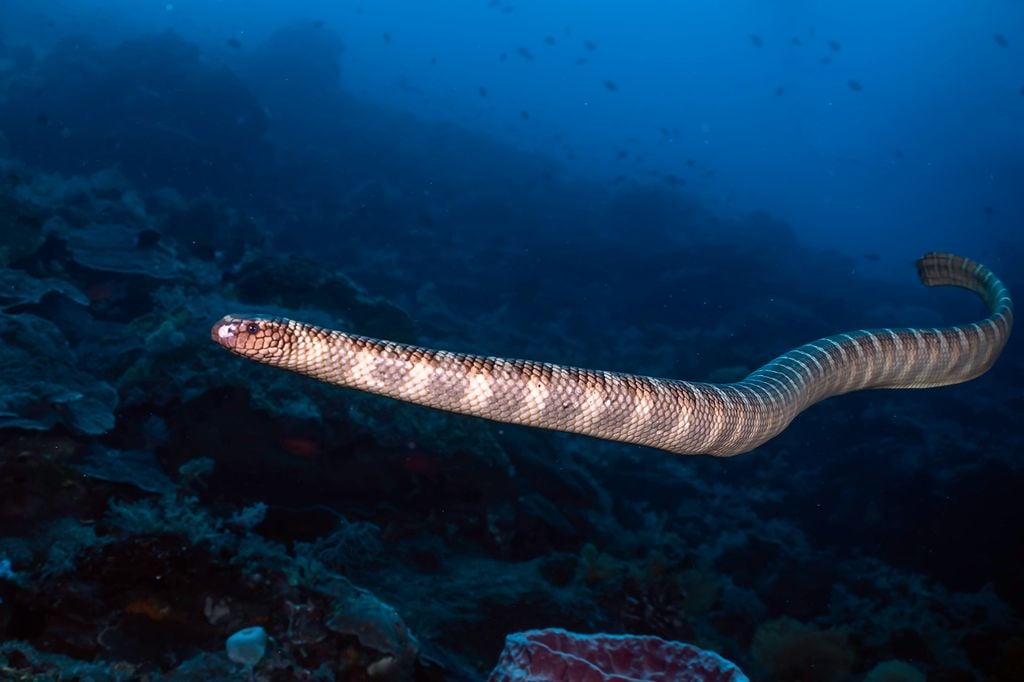
Much of the Banda Sea’s underwater terrain is the direct result of volcanic activity, which has produced steep walls, dark sand slopes, and jagged reef formations that look unlike anything in western Indonesia. Manuk Island is a well-known example, where an active volcanic island creates a specific seascape of sulphur-tinged water, dense reef fish populations, and large numbers of banded sea kraits (Laticauda colubrina).
The geology here is not just a backdrop. It actively shapes water temperature, nutrient flow, and the species that choose to inhabit each site.
4. The Forgotten Islands and the Wider Banda Sea Ecosystem
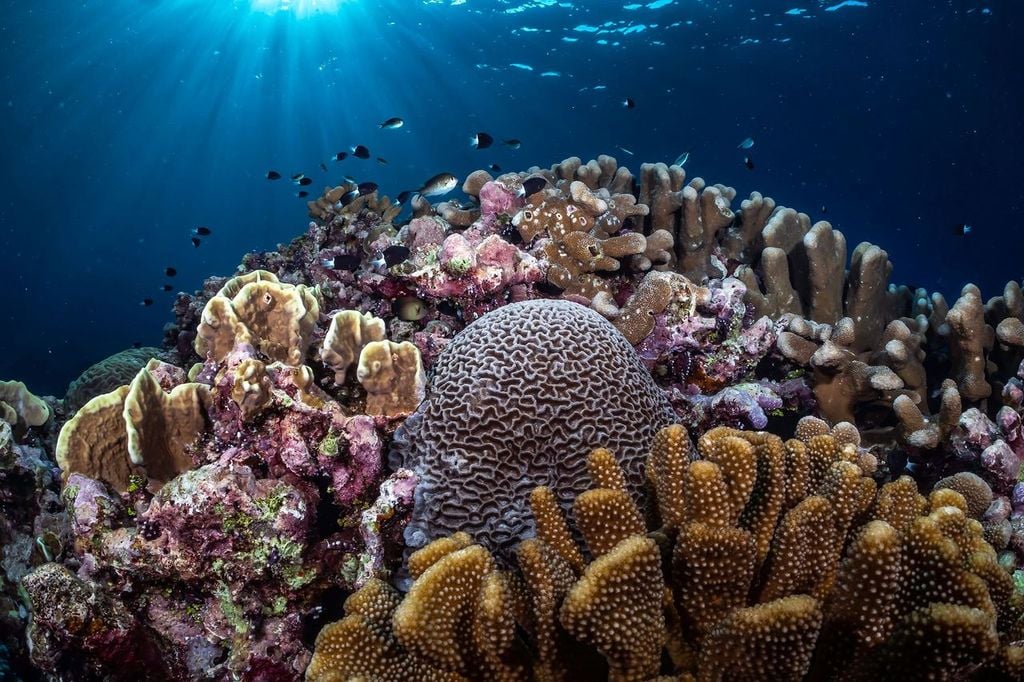
Some liveaboard itineraries push further southeast into a remote island chain commonly known as the Forgotten Islands. Think of them as an extension of the Banda Sea rather than a separate stop, with the same deep water, the same quiet reefs, and even fewer divers.
Routes that include them tend to be longer, but they give a fuller picture of just how vast and intact this part of Indonesia really is.
Diving Conditions in the Banda Sea
The Banda Sea is a rewarding place to dive, but it helps to arrive knowing what the conditions actually involve. Depths are greater, currents are more variable, and the open-ocean setting means dives can feel quite different from the sheltered reef diving common in western Indonesia.
Visibility and Water Temperature
Water visibility in the Banda Sea is often excellent, regularly reaching 20 to 30 metres on settled days, sometimes even up to 40 metres. It can drop with current shifts or upwellings, particularly at depth, so conditions are not always consistent across a single dive.
Thermoclines are common below 20 metres, where water temperature can fall noticeably from the 27°C to 29°C surface range. A 3mm wetsuit works for most divers, but if you tend to feel the cold at depth, a 5mm is worth considering.
Currents, Depth, and Experience Level
Many sites here involve deeper profiles, with dives commonly reaching 25 to 40 metres. Currents vary by site and season, and the more interesting sites often come with conditions that require steady buoyancy and a calm head.
Open Water certified divers can enjoy the shallower reef and wall sites without any issues. An Advanced Open Water qualification opens up the deeper dives and drift sites where the Banda Sea really comes into its own. If your buoyancy is still a work in progress, this is a destination worth working toward rather than rushing into.
Best Time to Dive the Banda Sea
The Banda Sea has two windows when conditions tend to align well for diving: March to April and September to November. Outside these periods, stronger monsoon swells and less predictable visibility make the crossing more challenging and the diving less consistent.
For hammerhead sightings specifically, September to November is the more productive window. Cooler upwellings during this period bring nutrient-rich water to the surface around seamounts and deep-water passes, which is what draws scalloped hammerheads into shallower, diveable depths in larger numbers.
How to Dive the Banda Sea
Before booking a dive trip to the Banda Sea, it’s important to know that this isn’t the kind of place you drive to and dive from a beach resort. Dive sites are spread across remote islands, offshore seamounts, and open ocean areas, often far from each other and beyond the reach of shore access.
With limited infrastructure on land and vast distances between locations, exploring the Banda Sea is best done by boat, which allows divers to reach sites that would otherwise remain inaccessible.
Why Most Divers Choose a Liveaboard
A liveaboard is the practical way to dive the Banda Sea, and for most itineraries, it is the only realistic option. Sleeping on board means you can reach remote sites early, move between islands without losing dive time, and cover a region that would simply be inaccessible from a fixed base.
How to Get to the Banda Sea
Most routes into the Banda Sea start with a domestic flight to Ambon, the main gateway city in Maluku, followed by your liveaboard departure. Getting there takes planning, usually involving a connection through Jakarta or Makassar, depending on where you’re flying from.
It is worth building buffer time into your travel, as domestic flight schedules in eastern Indonesia can be less predictable than you might be used to. Arriving a day early in Ambon is a straightforward way to protect your trip from delays.
Is the Banda Sea the Right Diving Destination for You?
The Banda Sea suits divers who are comfortable in open water and relaxed about variable conditions. You don’t need to be an expert, but you do need to be honest with yourself about where your skills are.
Divers who tend to get the most out of this destination are those with some experience under their belt, a solid handle on buoyancy, and a genuine interest in exploration over convenience. If you find yourself frustrated when conditions change, or sightings aren’t guaranteed, the Banda Sea may test your patience more than it rewards it.
That said, this is not an exclusive destination reserved for technical divers or seasoned expedition veterans. Advanced Open Water certification, reasonable comfort in current, and the right mindset will take you a long way here. The Banda Sea rewards preparation and curiosity in equal measure.
Banda Sea vs Other Indonesian Dive Destinations
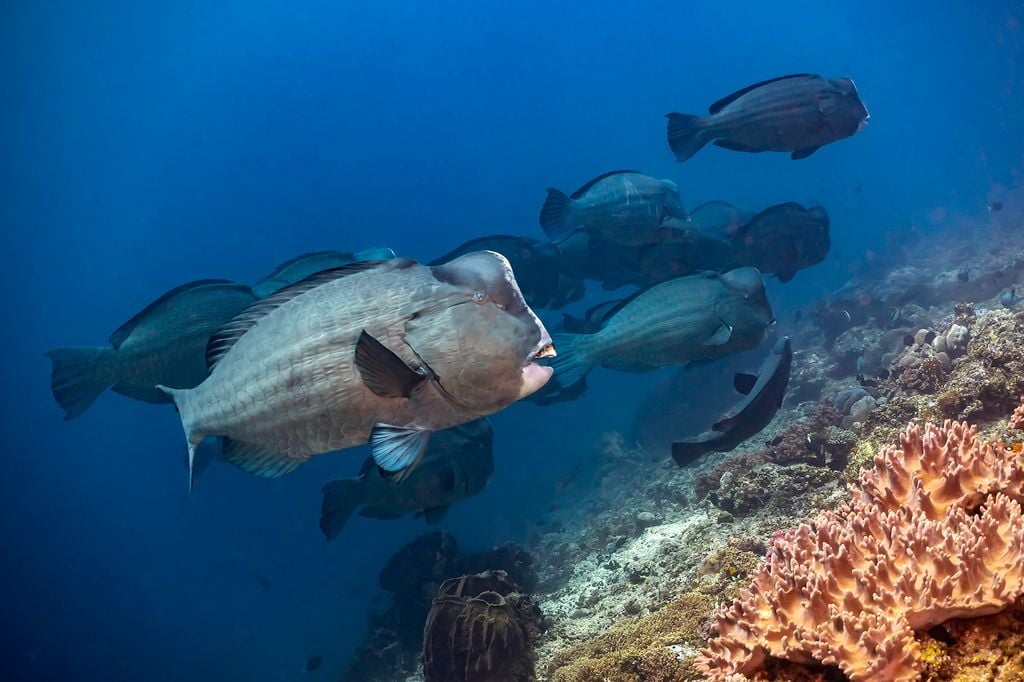
Indonesia has no shortage of world-class diving, and the Banda Sea sits within that same ecosystem but offers a distinctly different experience from the country’s better-known regions.
Banda Sea vs Raja Ampat
Raja Ampat is widely regarded as one of the most biodiverse marine areas on the planet, with calm, sheltered diving across a wide range of sites that suit all experience levels. The Banda Sea shares that biodiversity but trades sheltered conditions for open-ocean exposure and significantly fewer divers.
Banda Sea vs Komodo
Komodo delivers strong currents, dramatic topography, and reliable pelagic action in a more accessible and well-organised diving route. The Banda Sea has similar energy but pushes further into remote territory, with longer travel times and less predictable conditions.
Of course, it is important to note that neither destination is better than the other. They serve different moments in a diver’s journey, and many divers who love Raja Ampat or Komodo find the Banda Sea is the natural next step when they’re ready for something less defined.
Banda Sea vs Other Indonesian Dive Destinations
Few dive destinations in Indonesia have stayed as pristine as the Banda Sea has. With fewer people and less infrastructure, the reefs here have stayed in genuinely good condition, and that’s worth protecting.
So, if you do plan to visit, make sure to practice a few responsible diving habits to preserve the region’s fragile ecosystem:
- Buoyancy control: Practice good buoyancy to prevent disturbing the coral or stirring up silt.
- Maintain respectful distance: Keep your distance from marine life, avoid chasing or hovering too close to them, so you won’t disturb their natural behavior.
- Leave nothing behind: Remote dive sites have no cleanup crews. What goes in comes back out with you.
- Follow your guide’s lead: Local dive guides understand the sites, the currents, and the wildlife patterns. Deferring to their knowledge is both safer and more respectful to the environment.
Is the Banda Sea Worth the Effort?

For the right diver, absolutely. The Banda Sea asks more of you than most destinations in Indonesia, in travel time, physical readiness, and mental flexibility. What it gives back is remote reefs, genuine open-ocean encounters, and the quiet satisfaction of being somewhere most divers never reach.
Ready to plan your adventure in this remote frontier? If so, come explore the Banda Sea with Solitude World Liveaboard and Resort! Our liveaboard, Solitude Adventurer, is ready to take you on a journey across the best dive sites in the Banda Sea and nearby destinations, including Ambon and Raja Ampat!
With experienced local crews, thoughtful dive planning, and a comfortable environment between dives, you can focus on what matters most: being present in the moment and fully immersed in one of Indonesia’s most remote marine landscapes.